Ground liner
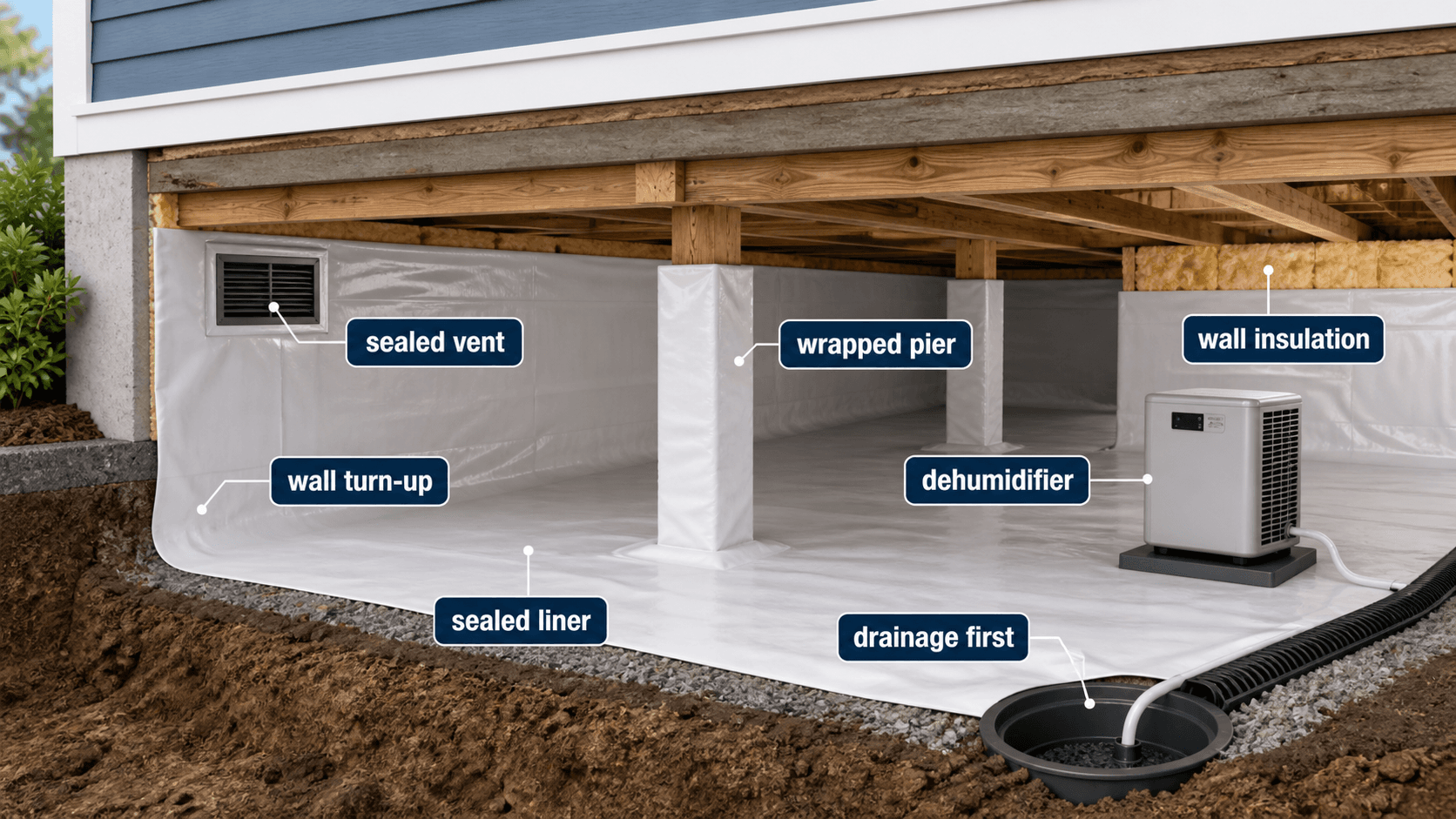
A durable vapor barrier covers exposed soil and is sealed at overlaps, edges, and penetrations.
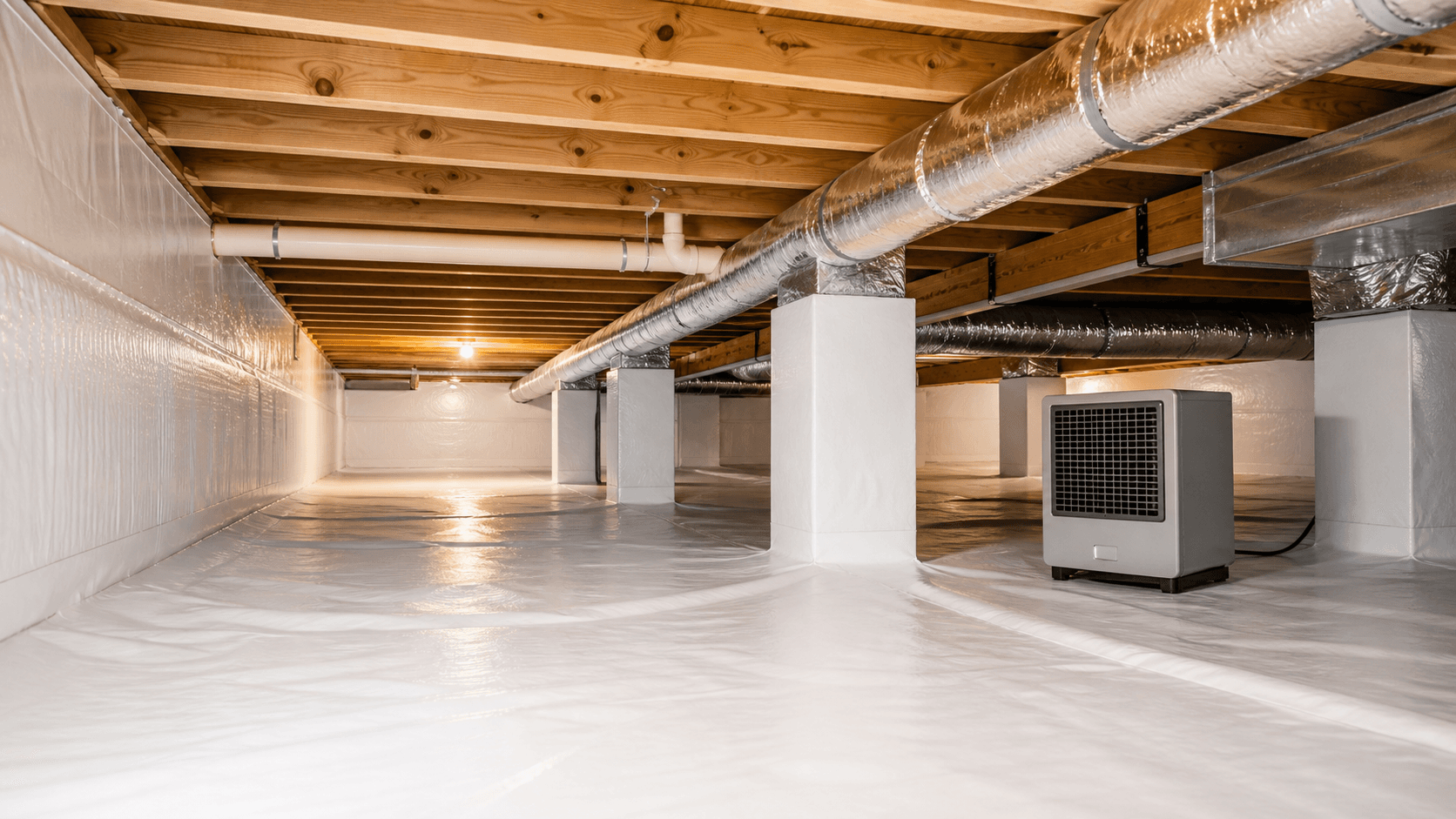
Crawl space encapsulation hub
Use this hub to understand when encapsulation helps, what a complete system includes, what should be fixed first, and how to compare crawl space quotes in Raleigh, Cary, Apex, and nearby Triangle communities.
Start here, then use the linked service, cost, symptom, and checklist pages for deeper decisions.
Start here
Encapsulation is a crawl space moisture-control system. It isolates the crawl space from ground vapor and humid outside air, then manages remaining humidity so the area stays more stable over time.
A durable vapor barrier covers exposed soil and is sealed at overlaps, edges, and penetrations.
The liner turns up foundation walls and wraps piers where the design calls for a fuller seal.
Foundation vents, access gaps, and obvious openings are sealed so outdoor air is not freely pulled in.
A dehumidifier, conditioned air, or another approved method manages moisture after the space is closed.
Drainage, sump pumps, grading, downspouts, and leaks are handled before the liner hides the ground.
The thermal boundary may shift from floor insulation to wall or rim insulation in a sealed design.
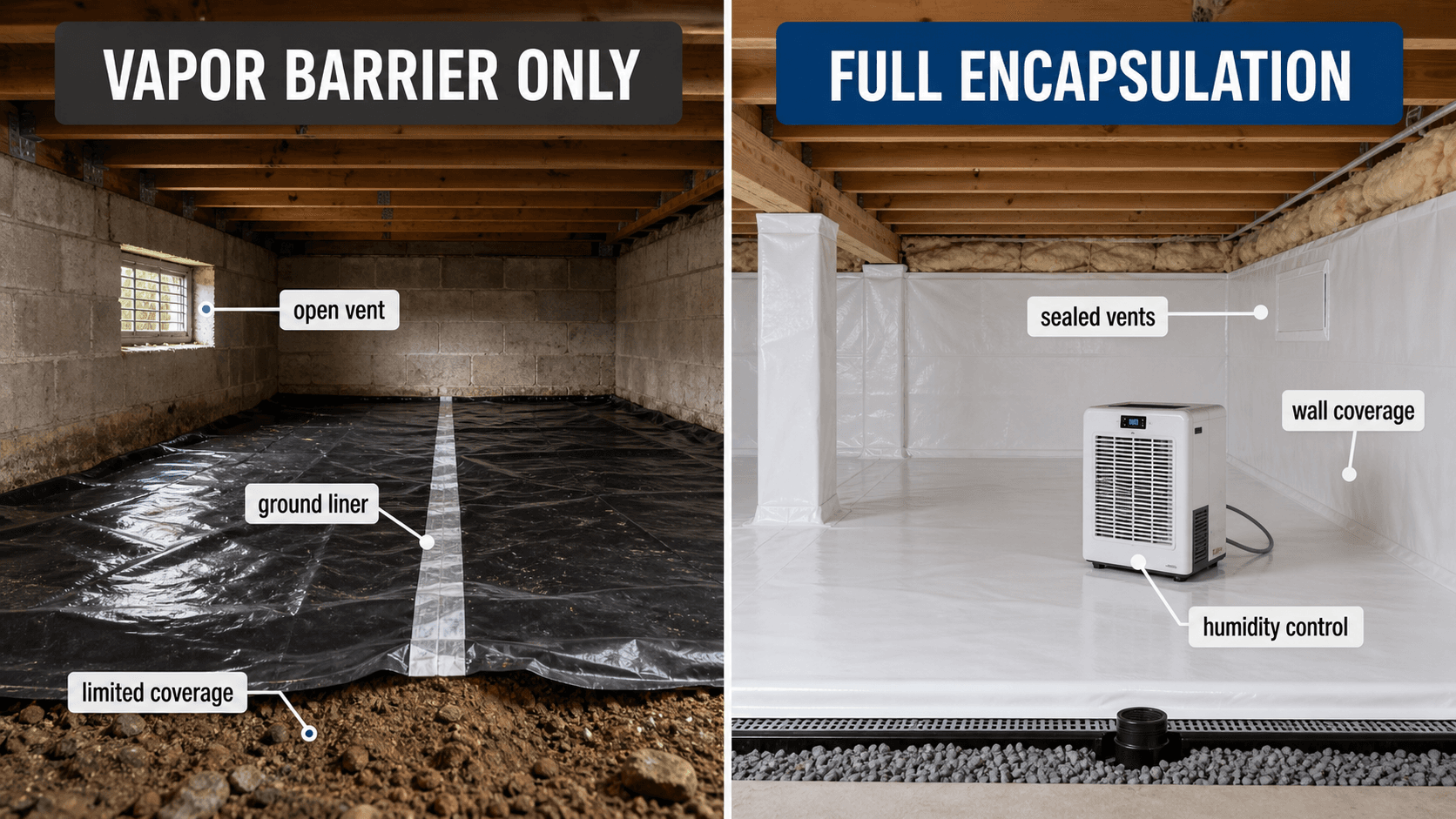
Watch
An honest walkthrough of vapor barrier vs. full encapsulation, the warning signs under your house, when sealing is the wrong first step, and realistic Triangle-area pricing.
Decision paths
Most homeowners do not start with a repair name. They start with odor, water, humidity, insulation damage, or inspection notes.
Start with moisture source, humidity, and air movement checks.
Open symptom guideCompare exposed soil, open vents, damp walls, and dehumidifier needs.
Open symptom guideFix drainage, grading, leaks, or sump needs before sealing.
Open symptom guideCorrect moisture before replacing insulation or covering old material.
Open symptom guideUse careful assessment language and correct the moisture source.
Open symptom guideReview structure before treating encapsulation as the main repair.
Open symptom guideScope comparison
The page cluster separates these scopes because they solve different problems. A lower quote may simply include fewer components.
Core guides
These pages make the cluster complete: scope comparison, crawl space design, humidity control, contractor questions, and warranty details.
Weigh the real benefits and drawbacks and get a plain verdict on whether it is worth it.
Read guideKnow when a ground liner is enough and when a sealed system is the better scope.
Read guideCompare open foundation vents with a closed, humidity-managed crawl space.
Read guideSee how active drying, supply air, and exhaust approaches differ after sealing.
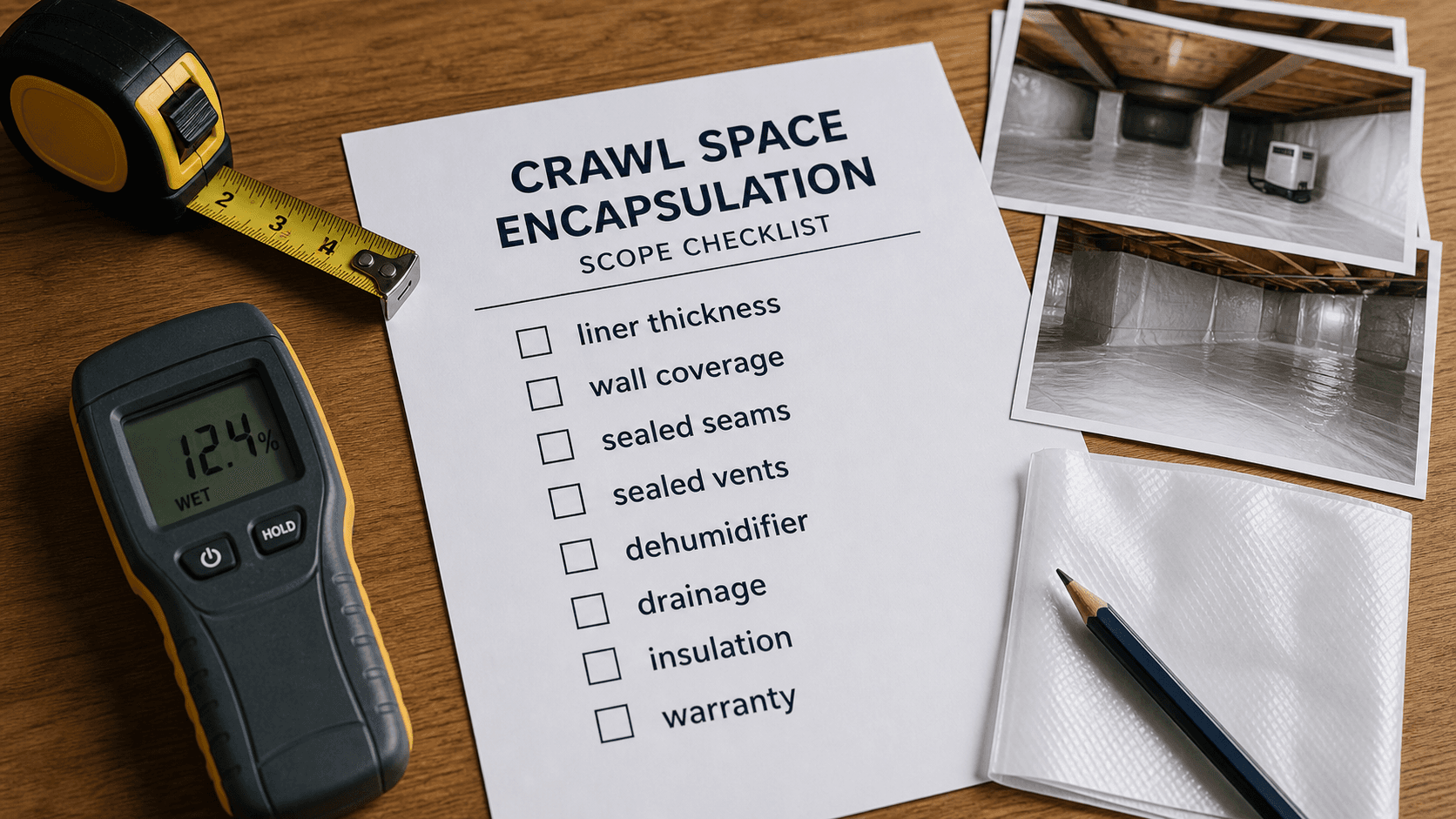
Read guideUse a homeowner checklist before approving a crawl space encapsulation quote.
Read guideUnderstand what should be written into material, workmanship, and equipment coverage.
Read guideCost and tools
Encapsulation prices change quickly when the project includes drainage, sump pumps, old insulation removal, dehumidification, or wood repairs.
Compare Triangle planning ranges by size, moisture severity, and project scope.
Open pageEstimate liner, overlap, waste, tape, and basic material needs for simple liner planning.
Open pageUpload one estimate and review scope clarity, vague wording, and missing contractor questions.
Open pageLocal context
Triangle crawl spaces often combine humid weather, vented foundations, HVAC ducts below the floor, older fiberglass insulation, and seasonal rain. That makes sequencing important.
Warm, humid outdoor air can enter vented crawl spaces and condense on cooler surfaces. Encapsulation can reduce that pathway only when the ground, vents, walls, drainage, insulation, and humidity-control method are treated as one system.
One Raleigh-area quote may include liner, wall coverage, dehumidifier, drainage, insulation removal, and permits. Another may include only floor plastic. Compare the written scope before comparing totals.
Service pages
Encapsulation overlaps with vapor barriers, dehumidifiers, drainage, insulation, and cleanout work.
FAQs
Short answers to the broad questions this hub is designed to organize.
Crawl space encapsulation is a moisture-control system that seals exposed soil, foundation walls, seams, vents, and key openings, then manages humidity with a dehumidifier, conditioned air, or another approved method.
Encapsulation is broader than a vapor barrier. A vapor barrier may be enough for a dry crawl space with exposed soil, while encapsulation is more appropriate when humidity, odor, condensation, wall moisture, or vented outdoor air are part of the problem.
Yes. Standing water, plumbing leaks, exterior drainage, grading, and sump pump needs should be reviewed before sealing. Encapsulation can manage vapor and humidity, but it should not hide active water entry.
Many do, especially when the crawl space is sealed in a humid climate and has a history of odor, condensation, or elevated humidity. The right method depends on measured conditions, equipment, and local requirements.
For Raleigh, Cary, Apex, and nearby Triangle communities, complete crawl space encapsulation commonly falls around $5,000-$15,000, with wet or repair-heavy spaces costing more.
Sources
These references support the moisture-control, closed crawl space, and local planning language used across this hub.
Last reviewed: August 7, 2026.