CrawlSpace Guide

Structural symptom guide

Sagging Floors Over a Crawl Space: What They May Mean

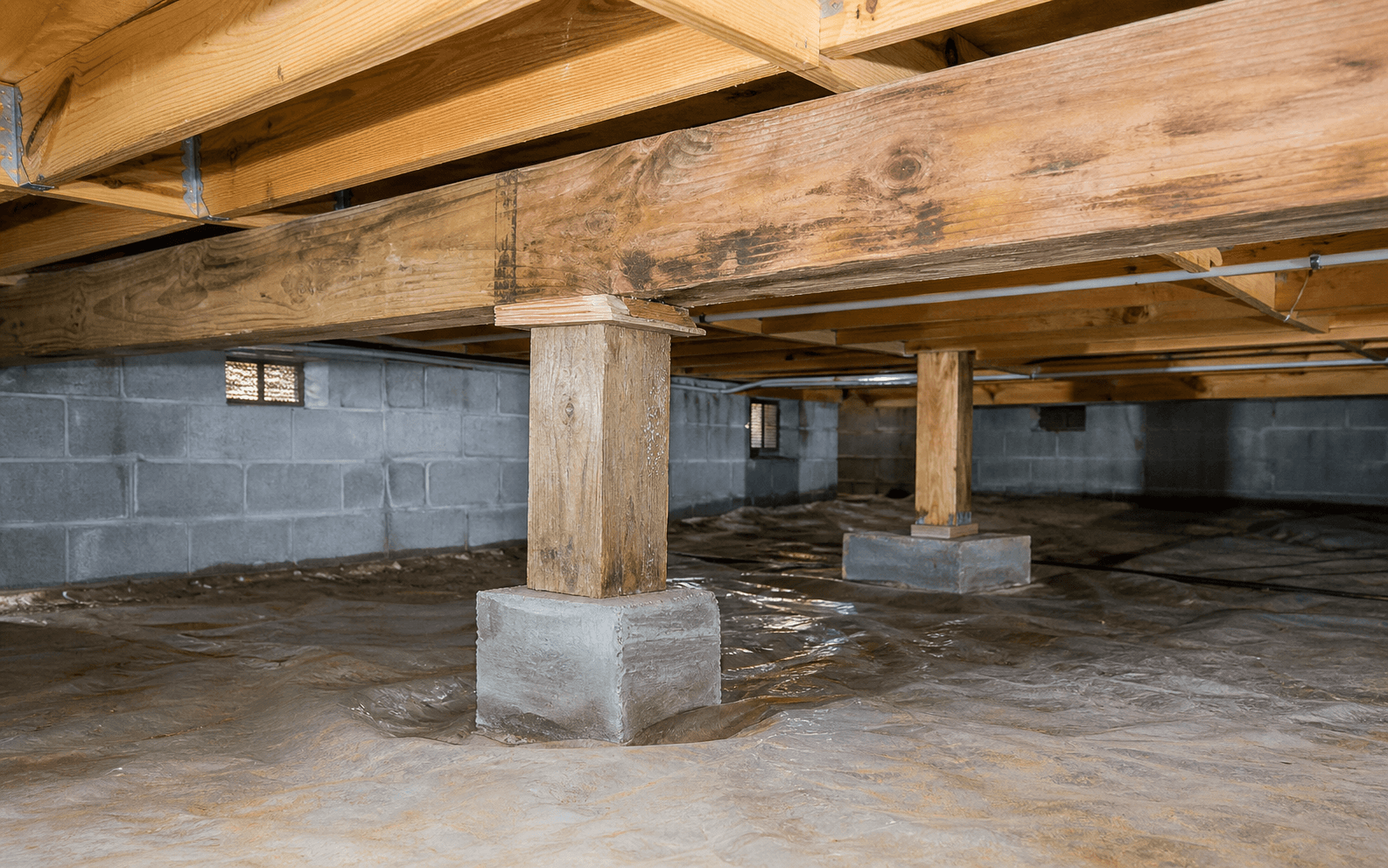
Sagging floors can point to weakened joists, beams, posts, piers, moisture damage, pests, subfloor problems, or foundation movement below the home.

Symptoms

What the floor pattern can suggest

The pattern does not diagnose the structure, but it can help you ask better inspection questions.

What you noticeWhat it may indicateSuggested next step
Localized dipWeak joist, subfloor damage, or missing supportInspect from crawl space below the area
Long slope across roomBeam, post, pier, or foundation movementAsk whether structural review is needed
Sag plus musty odorMoisture may be weakening framingCheck humidity, water, and insulation
Sag plus cracks or sticking doorsMovement may affect more than one systemDocument symptoms and request inspection
Recent sudden movementHigher concernAvoid adding load; seek qualified help

Likely causes

Common crawl space causes behind floor movement

Floor movement often combines moisture, wood condition, and support layout.

Moisture-weakened or rotted joists.

Undersized joists or long spans without enough support.

Damaged support beams, posts, piers, or footings.

Pest damage inside wood members.

Wet insulation hiding framing conditions.

Foundation settlement or soil movement.

Subfloor damage from leaks or long-term moisture.

Previous repairs that did not address the moisture source.

Heavy loads or remodeling changes above the crawl space.

Urgency

When floor movement needs faster review

Some signs deserve prompt professional evaluation.

SituationUrgencyWhy
Minor long-standing unevennessPlan inspectionOlder homes may have stable unevenness, but cause still matters
New or worsening sagHigher priorityChange over time suggests active movement or damage
Soft wood, rot, or pest signsHigher priorityStructural wood may have lost capacity
Cracks, sticking doors, or wall movementPrompt reviewMovement may involve more than the floor system
Sudden drop, cracking sounds, or unsafe accessDo not waitAvoid adding load and request qualified help

Quote review

Questions to ask before approving floor repairs

Structural quotes should make cause, scope, access, materials, and exclusions clear.

What structural member is damaged or undersupported?

Is moisture, pest activity, or settlement the cause?

Will joists be sistered, replaced, or supported?

Are beams, posts, piers, and footings included?

Is moisture control part of the sequence?

Is an engineer or permit needed?

How will floor movement be measured before and after work?

What exclusions could change the price?

Related pages

Related structural and moisture guides

Use these pages to connect floor movement to likely crawl space causes and repair planning.

FAQs

Floor movement FAQs

Short answers for homeowners comparing structural crawl space repairs.

Are sagging or bouncy floors always foundation problems?

No. They can come from joists, beams, posts, piers, moisture, pests, subfloor issues, or foundation movement. A crawl space inspection helps separate localized wood repairs from larger foundation concerns.

Can crawl space moisture cause floor movement?

Yes. Persistent moisture can weaken wood, contribute to rot, loosen insulation, and create conditions where framing loses stiffness or support.

Should I jack up a sagging floor myself?

No. Raising structural members too quickly or without proper support can damage finishes, plumbing, framing, and load paths. Structural work should be evaluated by qualified professionals.

Sources

Research notes and review date

These pages use current cost references, structural repair explainers, and crawl space moisture guidance.