CrawlSpace Guide

Insulation symptom guide

Wet or Fallen Crawl Space Insulation: What It Means

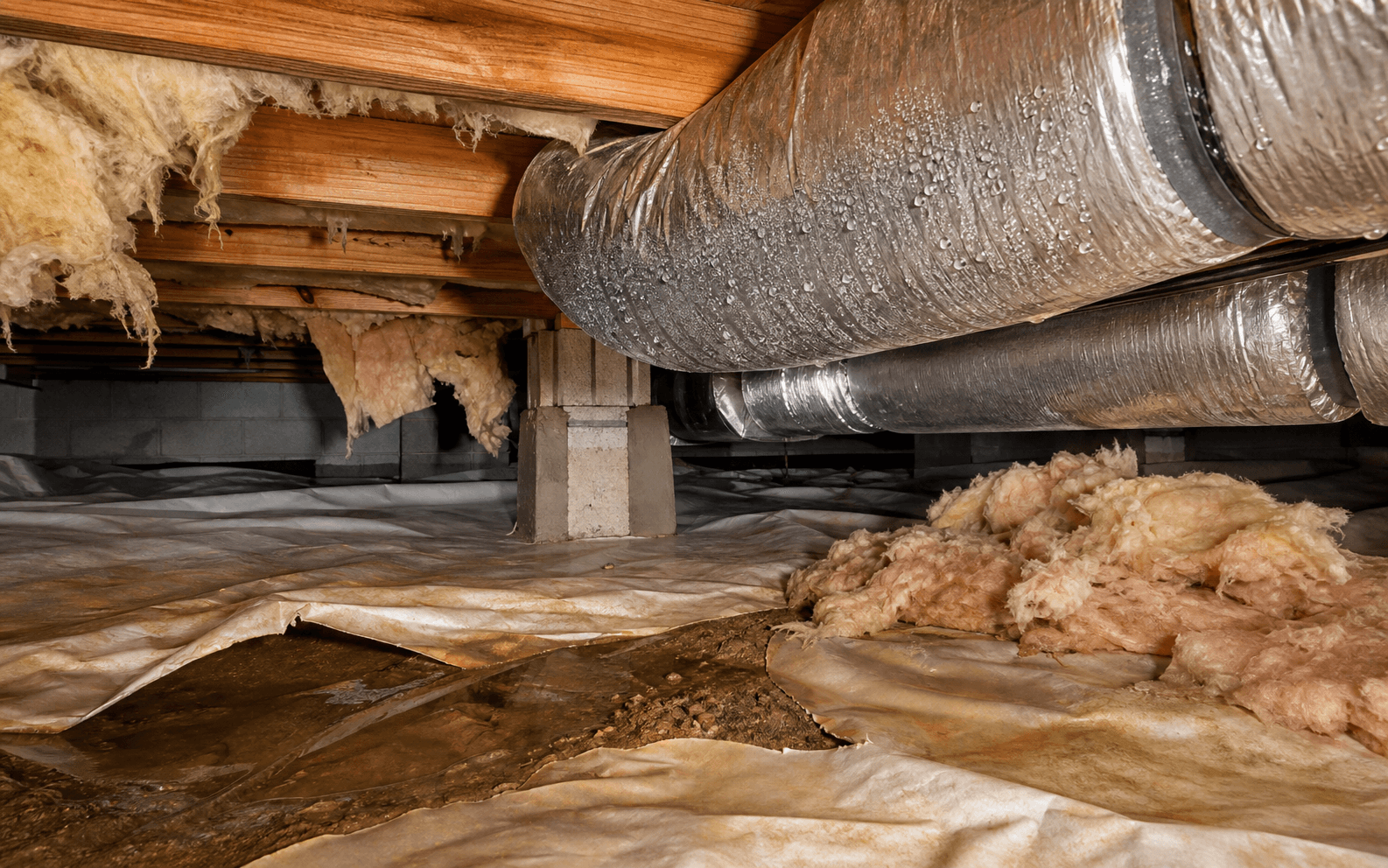
Wet or fallen crawl space insulation is usually a sign that the crawl space has a moisture, air, pest, support, or age problem. Replacing the material without correcting the cause can lead to the same failure again.

What it may indicate

What wet or fallen insulation can tell you

The condition of the insulation is a clue. Pair it with odor, humidity, water patterns, and access conditions.

What you seeWhat it may meanBest next step
Fiberglass hanging below joistsMoisture, age, poor support, or pest disturbanceInspect humidity, support method, and moisture source
Insulation feels heavy or dampMaterial may be holding waterPlan removal and identify water or vapor source
Insulation is stained below ductsDuct condensation or air leakage may be involvedCheck duct insulation, air sealing, and RH
Insulation has odorMoisture, debris, or contamination may be held in the materialCompare cleanout and moisture correction
Cold floors aboveInsulation may be missing, compressed, or disconnected from the subfloorReview floor assembly and air sealing

Likely causes

Common causes of failed crawl space insulation

Insulation rarely fails in isolation. The repair should explain what made it wet, heavy, loose, or ineffective.

High crawl space humidity that keeps materials damp.

Exposed soil or torn ground liner releasing water vapor.

Standing water or damp soil after rain.

HVAC duct condensation dripping onto nearby insulation.

Plumbing or condensate leaks above the insulation.

Open vents bringing humid outdoor air into a cooler crawl space.

Poor support that lets batts sag away from the subfloor.

Pest activity or previous trade work disturbing the material.

Insulation installed in the wrong location for the crawl space design.

Urgency

How urgent is wet crawl space insulation?

The urgency depends on moisture, safety, and whether the floor system or indoor comfort is affected.

SituationUrgencyWhy
Dry insulation slightly saggingPlan repairComfort and performance may be reduced
Wet insulation in one areaInvestigate soonA leak or condensation source may be active
Widespread damp insulation and odorHigher priorityMoisture may be affecting multiple materials
Wet insulation plus standing waterCorrect water firstNew insulation should wait until liquid water is handled
Soft wood, sagging floors, or rotUrgent reviewMoisture and structural concerns may overlap

Repair sequence

What to fix before replacing insulation

A durable insulation project starts with moisture and air control, not just fresh material.

StepWhy it mattersRelated page
Remove damaged materialWet or contaminated insulation can hold odor and hide framingCrawl space cleanout
Find the moisture sourceNew insulation can fail if water or humidity remainsHigh crawl space humidity
Correct water or vaporGround vapor and liquid water need different repairsVapor barrier or drainage
Choose floor or wall locationThe right location depends on vented vs sealed designFloor vs wall insulation
Verify drynessHumidity and wood moisture should be reasonable before closing workMoisture risk checker

Avoid

What not to do when insulation is wet or falling

These shortcuts can hide the cause and waste the replacement budget.

Do not install new insulation over damp framing.

Do not cover wet insulation with a vapor barrier or liner.

Do not assume insulation alone will fix a musty crawl space.

Do not ignore duct condensation or plumbing leaks.

Do not compare quotes unless removal, disposal, and moisture repairs are separated.

Do not enter the crawl space if water, wiring, sewage, or unstable framing makes it unsafe.

Related pages

Related insulation and moisture pages

Use these pages to connect damaged insulation to the right repair sequence.

FAQs

Wet crawl space insulation FAQs

Short answers for homeowners comparing symptoms, materials, and quotes.

Why is my crawl space insulation wet or falling down?

Wet or fallen insulation usually means moisture, gravity, pest activity, poor support, or old installation has affected the material. Common moisture sources include humid air, exposed soil, water after rain, plumbing leaks, and duct condensation.

Should I replace wet crawl space insulation right away?

Wet or contaminated insulation usually needs removal, but replacement should wait until the moisture source is understood. New insulation can fail again if the crawl space stays wet or humid.

Can fallen insulation cause cold floors?

Yes. Insulation that has sagged away from the subfloor, become compressed, or fallen out of the joist bays can reduce comfort and allow more heat loss through the floor assembly.

Can a vapor barrier fix wet insulation?

A vapor barrier can reduce ground moisture, but it will not fix plumbing leaks, duct condensation, bulk water, or insulation that is already wet and damaged.

Sources

Research notes and review date

This symptom guide uses cost guides, energy guidance, and crawl space building-science references.

Last reviewed: July 30, 2026.