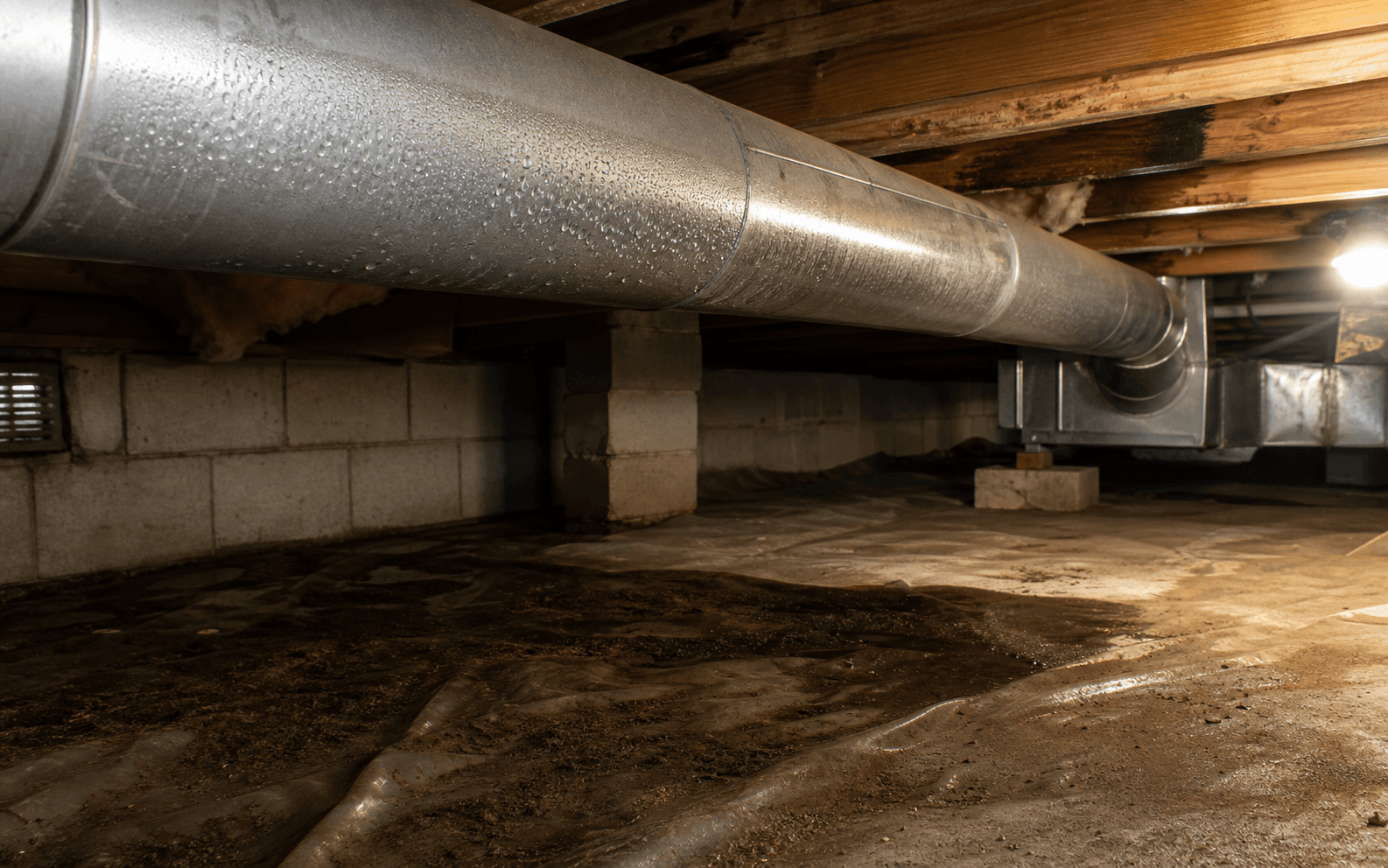
Crawl Space Wood Rot: Wet Rot, Dry Rot, and How to Tell Them Apart
Crawl space wood rot is fungal decay that begins when wood stays above roughly 20% moisture content. Wet rot stays where the water is; dry rot — despite the name — can move moisture and spread into drier wood nearby. Telling them apart matters, because dry rot usually means looking well beyond the damp patch you found.
Decay generally needs wood moisture content above about 20% to stay active.
Wet rot is soft and damp, and stops where the moisture stops.
Dry rot is brittle and cube-cracked, and can spread past the wet area.
Drying halts decay but does not restore strength to wood already weakened.
What it is
What wood rot in a crawl space actually is
Rot is not the wood 'going off' on its own. It is fungal decay, and fungi need the same thing every time: moisture.
Decay fungi break down the fibres that give framing its strength. They need wood that stays wet — generally above about 20% moisture content — along with oxygen and moderate temperatures. A crawl space supplies all three comfortably, which is why decay tends to appear there long before anywhere else in a house. The moisture usually comes from ground vapor rising through bare soil, water entering after rain, a plumbing leak, or condensation forming on cool surfaces in humid weather. Where there is standing water, the question is usually when decay started rather than whether it will.
The distinction that matters
Wet rot vs dry rot: how to tell which you have
Both are fungal decay and both need moisture to begin. The difference is what happens next — and it changes how far you have to look.
Wet rot
Dry rot
Where it stays
Confined to wood that is actually wet
Spreads outward into drier wood nearby
Appearance
Darkened, soft, spongy; wood stays damp to the touch
Dry, brittle, cracked into cube-like blocks across the grain
Growth on the surface
Often slimy or stringy where damp
Cotton-wool sheets or grey strands that can cross masonry
Smell
Damp, earthy
Musty, sometimes described as mushroom-like
Moisture it needs
Ongoing wetting — a leak, seepage, or standing water
Can start wet, then carry its own moisture onward
What it usually means for you
Find and stop the water source; damage is likely local
Assume the search area is larger than the visible patch
The practical difference is not how the wood looks, but how far you have to search once you find it.
The name “dry rot” misleads people constantly. It does not mean the fungus grows without moisture — it needs moisture to start, like any decay. It is named for the wood it leaves behind, which is dry and crumbly. Identifying which type you have from photographs is not reliable, and the two can occur together, so treat this table as a way to ask better questions rather than as a diagnosis.
Rule things out first
Is it rot, or something else?
Several different problems look similar under a torch, and they do not have the same answer. This is worth settling before anyone quotes for repair.
What it might be
What it looks like
The quick check
What it points to
Wood rot
Soft or crumbling when probed; loses strength; may be dark or cube-cracked
A screwdriver sinks in with light pressure
Moisture control, then structural assessment
Termite or beetle damage
Narrow galleries or tunnels, sometimes mud tubes on piers or walls
Wood is hollowed in channels rather than uniformly soft
A licensed pest inspection — this is not a rot repair
Surface mould or mildew
Fuzzy or speckled growth sitting on the surface
Wipes or scrapes off; wood underneath is still firm
A moisture problem, but the wood may be undamaged
Old water staining
Dark tide marks or discoloration with no softness
Wood is firm and dry when probed
Evidence of a past event; check whether it is still active
How to check
The 20% rule, and the probe test
Two things a homeowner can do without special equipment, and the point at which both stop being reliable.
The probe test
Press a screwdriver into the suspect wood with moderate hand pressure, then try sound wood a metre away for comparison. Healthy framing resists and the tip barely marks it. Decayed wood gives way, and the tip sinks in with little effort or lifts fibres out. Pay particular attention to joist ends where they bear on masonry, and to the sill plate — both wet first and dry last.
The moisture threshold
Decay fungi are generally treated as active above roughly 20% wood moisture content, and wood held reliably below that is much less likely to decay. An inexpensive pin-type moisture meter reads it directly. Readings move with season, temperature, and exactly where on the member you measure, so a single number is a data point rather than a verdict — a pattern of high readings across several members says far more. Air humidity is a related but different measurement; see what crawl space humidity should be.
Both checks tell you whether something is worth pursuing. Neither tells you whether a joist still carries its load, how far decay extends inside a member, or whether framing needs replacing or reinforcing. Those are judgements that need someone under the house, and where structure is in question, a structural engineer rather than a moisture contractor.
Where to look
Where crawl space rot shows up first
Decay follows moisture, so it appears in a fairly predictable order. These are the members worth checking before anything else.
Where
Why it starts here
Related guide
Sill plate and band joist
Sits lowest and closest to masonry, so it wets first and dries last
The order is not optional. Repaired framing in a crawl space that is still wet is exposed to exactly the conditions that damaged it.
The first job is removing the moisture source, whether that is water entry, ground vapor, or a leak — drying the crawl space out covers the sequence. Once conditions are stable, decayed framing is assessed on its own merits and repaired or reinforced as needed; that scope is covered in wood rot repair. If you are trying to work out where this sits among everything else a crawl space might need, the guide to which repair you need, and in what order lays out the sequence. Nothing on this page can confirm what is happening under your own floor — that needs an in-person look.
Sistering new lumber alongside decayed joists is the repair most homeowners are quoted first. It fails for the same reason the rot started: wood held above roughly 20% moisture content keeps decaying, and the new framing is in the same crawl space as the old. The video walks the order of work and the questions to ask before approving a carpentry-only quote.
FAQs
Crawl space wood rot questions
What is the difference between wet rot and dry rot?
Wet rot stays in wood that is actually wet and generally stops where the moisture stops, so damage tends to be local to the leak or damp area. Dry rot can transport moisture through its own strands and spread into drier wood nearby, sometimes crossing masonry. Wet rot is usually soft and damp; dry rot is typically dry, brittle, and cracked into cube-like blocks.
Is dry rot actually dry?
No, and the name causes real confusion. Dry rot needs moisture to start, the same as any fungal decay. It is called dry rot because the wood it leaves behind is dry, brittle, and crumbly. The practical consequence is that finding dry rot usually means looking beyond the damp patch you found, because the fungus can carry moisture into wood that appears dry.
What causes wood rot in a crawl space?
Sustained moisture in the wood, which in a crawl space usually comes from ground vapor through bare soil, water entering after rain, a plumbing leak, or condensation on cool surfaces in humid weather. Decay fungi generally need wood moisture content above roughly 20% to become active, which is why crawl spaces that stay damp are far more likely to develop it than ones that dry out between wettings.
How can I tell if it is rot or termite damage?
Look at the pattern. Rot makes wood uniformly soft or crumbly and a probe sinks in with light pressure. Termite and beetle damage leaves narrow galleries or tunnels, and there may be mud tubes running up piers or foundation walls. They can occur together, and the response is different: termite damage needs a licensed pest inspection, not a rot repair.
At what moisture level does wood start to rot?
Decay fungi are generally considered active once wood moisture content stays above about 20%, and wood kept reliably below that is much less likely to decay. It is a threshold rather than a switch, and readings vary with temperature, season, and where on the member you measure, so treat a single reading as one data point rather than a verdict.
Does drying the crawl space stop wood rot?
Drying stops decay from progressing, because the fungus needs moisture to stay active. It does not restore strength to wood that has already lost it. So drying is the necessary first step, but framing that is already soft or structurally reduced still needs to be assessed and repaired on its own merits.