Can this repair be done without moisture control?
Sometimes, but only if moisture is not part of the cause. If water, high humidity, wet insulation, or wood decay is present, the repair plan should also address the crawl space environment.
Beam and girder service guide
Beam and girder repair addresses damaged or undersupported main floor supports below the home, especially when sagging floors, moisture damage, or failing posts are present.
Repair methods
The right repair depends on which member is damaged, whether support below it is stable, and whether moisture caused the failure.
| Method | Best fit | Important caution |
|---|---|---|
| Wood beam reinforcement | Limited splitting or deflection where existing wood is mostly sound | Must restore proper bearing and fastening |
| Beam replacement | Rotted, crushed, split, or undersized main supports | Often needs temporary shoring during removal |
| Supplemental beam | Long joist spans or floor bounce across a wider area | Requires posts or piers with stable footings |
| Post or pier correction | Beam is sound but support below it has settled or tilted | Bearing points must transfer load into stable soil |
| Moisture repair | Rot, rust, musty odor, or wet insulation near the beam | Keeps repaired wood from repeating the same damage |
When needed
These signs help homeowners ask focused questions during a crawl space inspection.
A long dip follows the line of a beam or girder.
Several rooms slope toward the same crawl space support line.
A beam is cracked, crushed, rotted, or separating at joints.
Posts below the beam are tilted, loose, shimmed, or sitting on soft soil.
Temporary jacks or stacked blocks appear to be carrying floor load.
Wet insulation, standing water, or high humidity is present near structural wood.
Doors, trim, or flooring above the beam line show new movement.
A home inspection report calls out beam, girder, or support concerns.
A contractor recommends encapsulation but also notes structural repair first.
Repair sequence
Structural repair works best when the cause, support path, and crawl space environment are reviewed together.
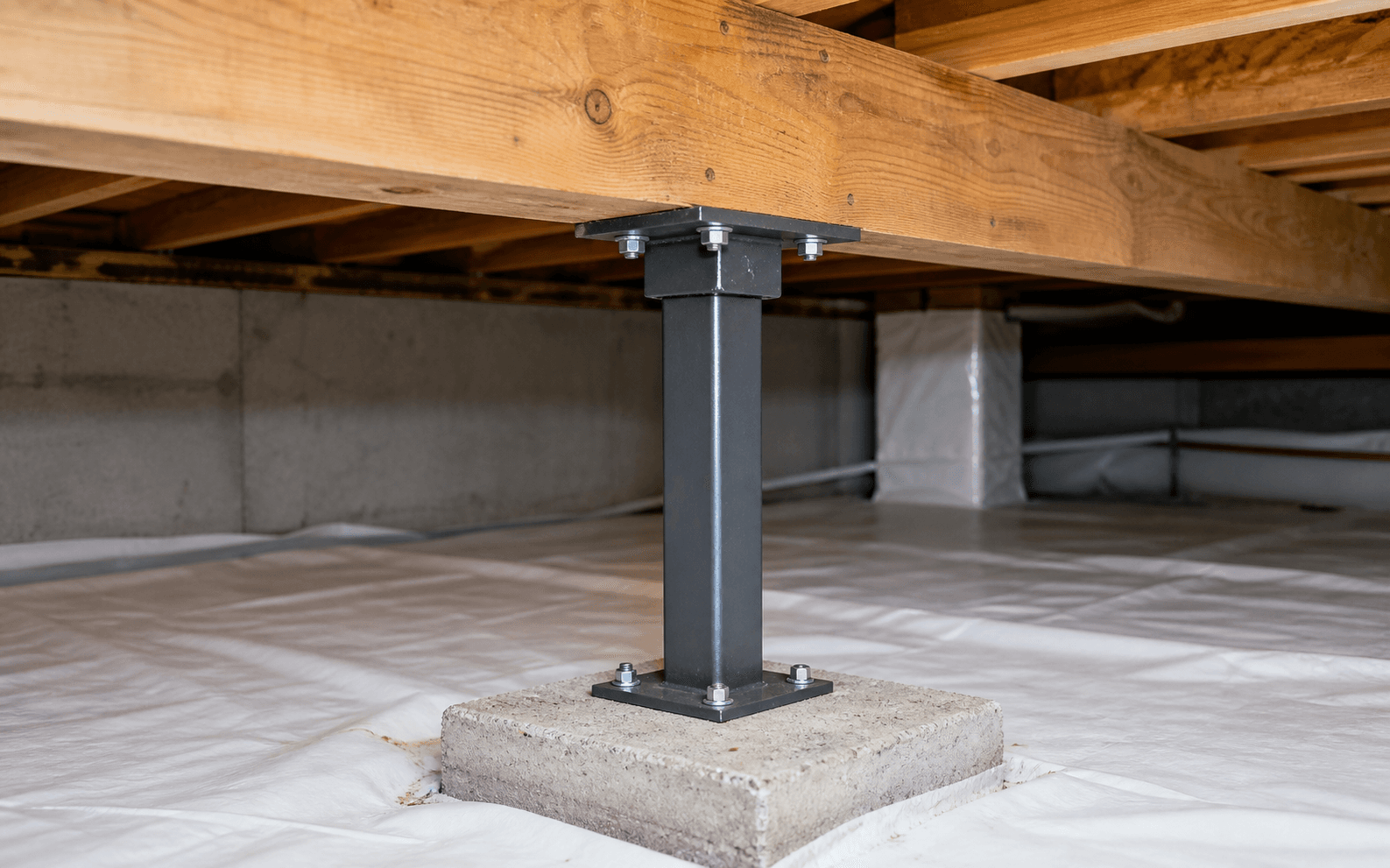
| Step | What to confirm | Why it matters |
|---|---|---|
| Inspect from below | Member condition, bearing, moisture, pests, access | Identifies the actual repair target |
| Trace the load path | Joists, beam, posts, piers, footing, soil | Prevents shifting the problem to another weak point |
| Correct active moisture | Leaks, drainage, vapor, humidity, wet insulation | Keeps new wood or supports protected |
| Prepare stable access | Debris, insulation, old liner, tight clearances | Allows accurate repair and safer work |
| Complete structural repair | Materials, fastening, bearing, shoring, lift limits | Restores support without over-lifting |
| Document and monitor | Photos, measurements, warranty terms, maintenance | Helps compare results over time |
Quote review
Structural quotes should make cause, scope, access, materials, and exclusions clear.
Which member or support is being repaired?
Is the cause moisture, settlement, pest damage, age, or poor installation?
Are temporary supports or gradual lifting included?
Are footings, posts, fasteners, connectors, and materials specified?
Is access, cleanout, or insulation removal included?
Is moisture control included or listed separately?
Is an engineer or permit needed?
What warranty conditions depend on keeping the crawl space dry?
Related pages
Use these pages to connect floor movement to likely crawl space causes and repair planning.
FAQs
Short answers for homeowners comparing structural crawl space repairs.
Sometimes, but only if moisture is not part of the cause. If water, high humidity, wet insulation, or wood decay is present, the repair plan should also address the crawl space environment.
No. Encapsulation controls the crawl space environment. Structural repair restores damaged or missing support. When both are needed, structural work usually comes first.
An engineer may be needed when load paths are unclear, damage is widespread, settlement is active, major members are replaced, permits require it, or the repair affects real estate negotiations.
Sources
These pages use current cost references, structural repair explainers, and crawl space moisture guidance.
Last reviewed: July 30, 2026.