Outdoor air can add moisture
During humid weather, open vents may bring moisture-laden air into the crawl space. If that air contacts cooler ducts, pipes, or masonry, condensation can appear even when there is no obvious leak.
Symptom guide for Triangle homeowners
High crawl space humidity means the air under your home is holding too much moisture for too long. Persistent readings above 60% RH deserve attention, especially when paired with musty odor, condensation, wet insulation, mold-like growth, or wood moisture concerns.
Humidity levels
Relative humidity changes with temperature and weather. Repeated readings and visible symptoms matter more than a single number.
| Humidity reading | What it suggests | What to do |
|---|---|---|
| 30-50% RH | Generally preferred indoor range where practical | Monitor and keep moisture sources controlled |
| 50-60% RH | Watch zone for crawl spaces | Look for odor, condensation, and seasonal patterns |
| 60-70% RH | High enough to investigate | Check vapor barrier, vents, drainage, ducts, and humidity control |
| 70%+ RH | Persistent moisture concern | Professional inspection is wise, especially with odor or damp materials |
| Wet surfaces or standing water | Liquid water problem | Fix drainage, leaks, or seepage before relying on drying equipment |
Symptoms
High humidity often shows up as odor, condensation, damp materials, or comfort issues in the rooms above.
Musty smell near the crawl space access or inside the home.
Condensation on ducts, pipes, insulation, or foundation walls.
Wet, sagging, or fallen insulation.
Mold-like growth or dark staining on joists.
Rust on metal supports, fasteners, or HVAC equipment.
Pest activity or damp debris under the house.
Indoor humidity that feels sticky or hard to control.
Wood moisture comments in an inspection report.
Humidity readings that stay high after storms or humid days.
Watch
Because of the stack effect, crawl space moisture leaves clear signs in your living space. This walkthrough shows what to look, smell, and measure for — no crawling required.
Likely causes
Most crawl space humidity problems come from one or more moisture pathways. The most useful inspection separates vapor, air, liquid water, and equipment issues.
| Likely cause | How common | Severity | Why it matters |
|---|---|---|---|
| Exposed soil or torn vapor barrier | Very common | Moderate | Ground moisture can raise crawl space humidity continuously. |
| Open vents during humid weather | Very common | Moderate | Humid outdoor air can enter and condense on cooler surfaces. |
| Poor drainage or wet foundation perimeter | Common | High | Water near the foundation can keep masonry, soil, and crawl space air damp. |
| HVAC duct condensation | Common | Moderate to high | Cool ducts can collect moisture when surrounding air is humid. |
| Plumbing or condensate leak | Less common | High | Leaks can quickly create high humidity and wet materials. |
| Incomplete encapsulation or undersized dehumidifier | Common after repairs | Moderate | A sealed crawl space still needs working humidity control. |
Watch
A 30-second look at the stack effect — why up to half the air on your first floor is pulled straight up from the crawl space — plus a quick floor-level sniff test.
Safe checks
You do not need to diagnose the whole crawl space. These observations can help you ask better questions.
Read relative humidity with a simple hygrometer near the crawl space access.
Look for condensation on ducts, pipes, insulation, or the access door.
Check whether plastic ground cover is missing, torn, loose, or holding water.
Look for standing water, muddy soil, or wet foundation walls after rain.
Notice whether musty odor is stronger after humid days or storms.
Review home inspection notes for moisture readings, wood moisture, or ventilation comments.
Avoid
Some quick fixes can make the real problem harder to see or more expensive to repair later.
Do not cover standing water with plastic and call it fixed.
Do not ignore musty odor just because the crawl space is out of sight.
Do not run a bucket-style room dehumidifier where nobody will empty it.
Do not seal vents without a plan for code-appropriate humidity control.
Do not claim mold species or health effects without qualified testing.
Do not cover wet insulation, rotten wood, or pest damage before repairs are understood.
Repair paths
The right repair depends on the moisture source. A dehumidifier, vapor barrier, encapsulation, or drainage system each solves a different part of the problem.
Best when exposed soil or a torn liner is the main moisture source.
Learn moreBest when several moisture pathways need to be sealed and managed.
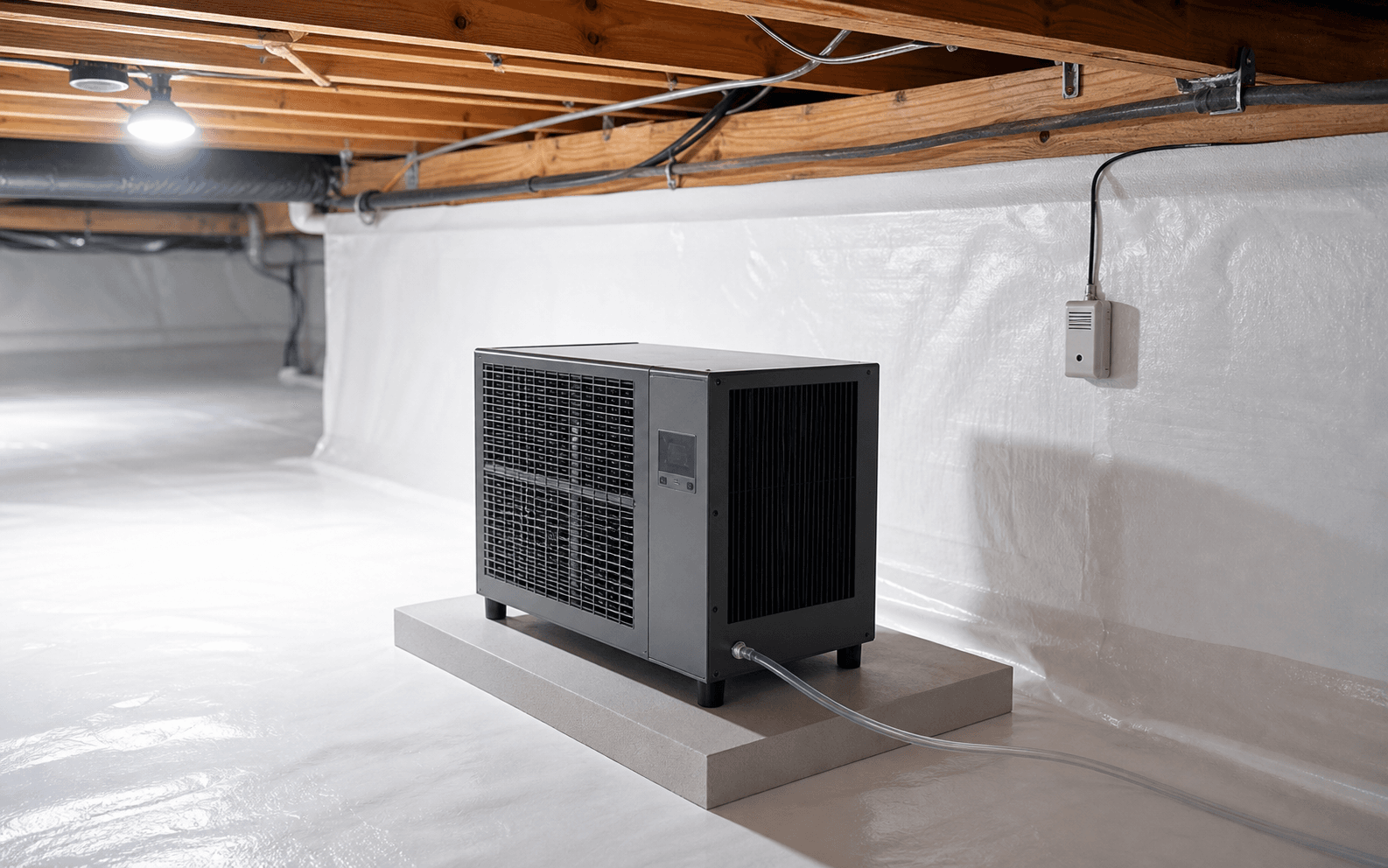
Learn moreBest when humidity remains high after moisture sources are reduced.
Learn moreNeeded first when liquid water enters or collects after rain.
Learn moreRelevant when insulation is wet, sagging, contaminated, or installed in the wrong place.
Learn moreGet help organizing symptoms, photos, and next steps.
Learn moreLocal context
Triangle humidity often makes vented crawl spaces harder to manage during warm months.
During humid weather, open vents may bring moisture-laden air into the crawl space. If that air contacts cooler ducts, pipes, or masonry, condensation can appear even when there is no obvious leak.
A useful humidity review looks at repeated readings, season, recent rain, crawl space ventilation, ground cover condition, and whether HVAC ducts or equipment are located below the floor.
Contractor questions
Good answers should separate measurement, cause, repair scope, and verification.
What humidity readings did you measure, and where?
Is the moisture coming from soil vapor, humid vents, bulk water, ducts, or leaks?
Does the crawl space need drainage before sealing or dehumidification?
Is the existing vapor barrier continuous and sealed?
Would encapsulation be recommended, or is a vapor barrier enough?
What humidity-control method will be used after sealing?
How will the result be verified after installation?
What maintenance is required to keep humidity under control?
FAQs
Short answers for homeowners checking humidity readings or inspection report notes.
For general homeowner planning, humidity below 60% RH is a useful upper boundary, and many moisture-control systems aim closer to 45-55% RH. EPA guidance says indoor humidity should generally stay below 60% and ideally between 30% and 50% where possible.
Persistent 70% RH is high enough to investigate, especially if there is musty odor, condensation, wet insulation, or staining on wood. A single short-term reading after unusual weather is less useful than repeated readings over time.
Common causes include exposed soil, torn vapor barriers, humid outdoor air through vents, drainage problems, wet foundation walls, duct condensation, plumbing leaks, and incomplete moisture-control work.
It can help when ground moisture is the main source. It may not be enough if humid air, standing water, duct condensation, leaks, or poor drainage are also part of the problem.
Encapsulation may be appropriate when humidity is persistent and multiple moisture pathways are present. Drainage or leak repairs should come first when liquid water is active.
A dehumidifier may be useful after moisture sources are reduced, especially in a sealed or encapsulated crawl space. It should not be the only solution for standing water or leaks.
Sources
This page uses official humidity and moisture-control guidance, building-science crawl space references, and homeowner decision criteria.
Last reviewed: July 29, 2026.