What does a crawl space drainage system do?
A crawl space drainage system collects water that enters or accumulates below the home and directs it to a discharge point, often through an interior drain line and sump pump.
Water-control service guide
Crawl space drainage collects water that enters or accumulates below the home and moves it to a planned discharge point. It should be considered before encapsulation when water is visible after rain or remains in low areas.
When needed
Drainage is about liquid water. It is different from vapor barriers and dehumidifiers, which handle vapor and air moisture.
| Condition | What it suggests | Likely next step |
|---|---|---|
| Water enters after rain | Exterior water is reaching the foundation | Check grading/downspouts and interior drainage need |
| Water collects in a low point | Gravity needs help | Drain line and sump basin may be needed |
| Foundation walls seep | Water is entering through or under walls | Interior perimeter drainage may be appropriate |
| Encapsulation quote mentions water | Water control should come first | Separate drainage scope from liner scope |
| Only damp soil, no puddles | Vapor may be the main issue | Evaluate vapor barrier and humidity control |
Options
Many projects combine exterior water reduction with an interior drainage system, so it helps to compare both drainage solutions before choosing.
| Approach | What it does | Best fit |
|---|---|---|
| Exterior grading/downspouts | Moves roof and surface water away | First review for rain-related water |
| Interior drainage system | Collects water at the crawl space perimeter or low areas | Water that still enters or collects |
| Sump pump | Lifts collected water to discharge | Low spots or no gravity drain route |
| Vapor barrier | Reduces ground vapor | Damp soil without liquid water |
| Encapsulation | Seals and manages air/moisture after water control | Humid or musty spaces after drainage is handled |
Watch
A walkthrough of diagnosing crawl space moisture — telling liquid water from ground vapor — and why drainage and a sump pump come before encapsulation.
Components
A quote should explain the water path from entry point to discharge.
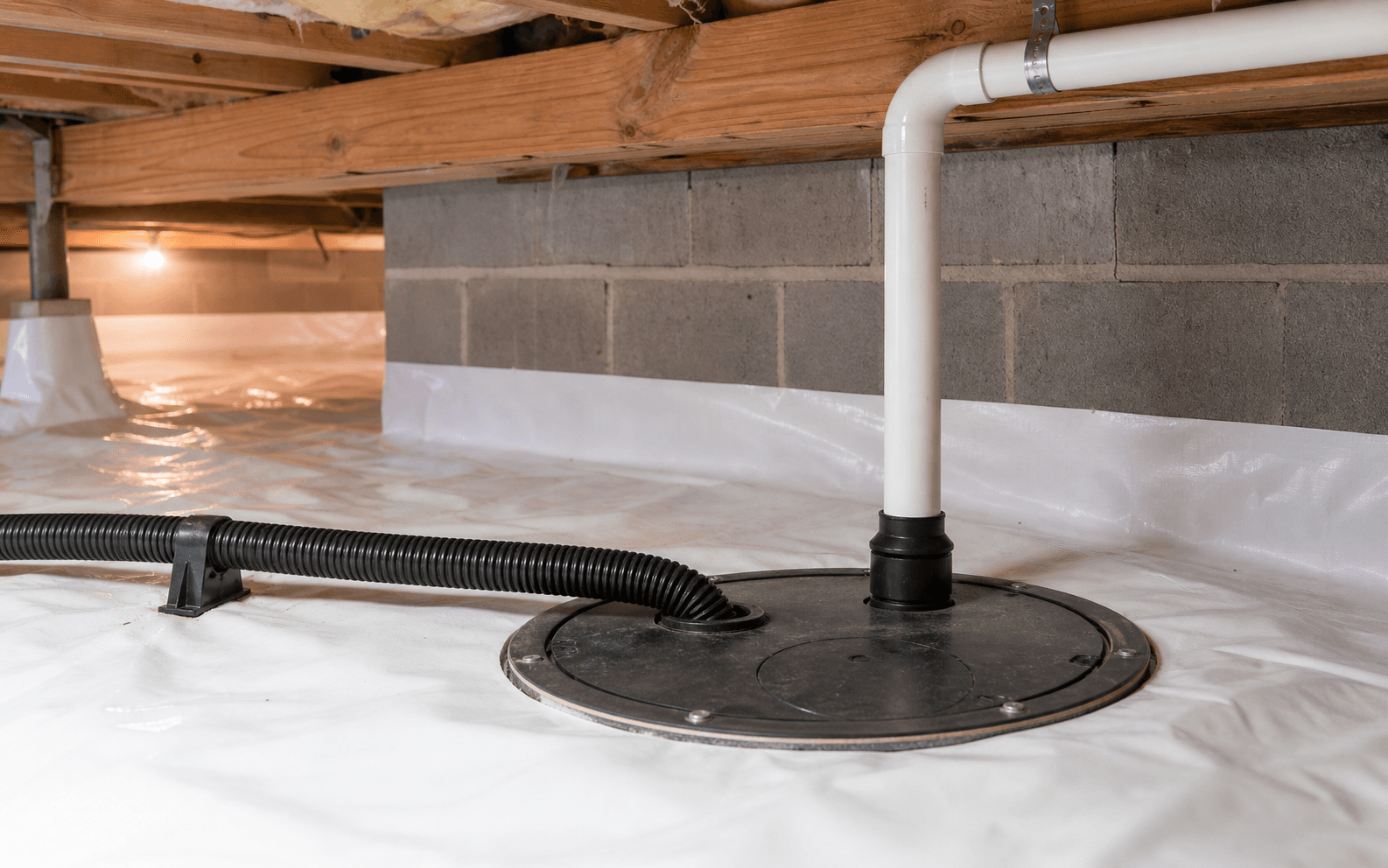
Perimeter trench or collection channel
Drain pipe or drainage matting
Gravel or drainage media
Sump basin with sealed lid
Pump, check valve, and discharge line
Exterior discharge point away from foundation
Sequence
The sequence matters because drainage is often installed before vapor barrier, dehumidifier, insulation, or encapsulation work.
| Step | What should happen |
|---|---|
| Inspect water pattern | Identify where water enters and where it collects. |
| Correct obvious exterior issues | Review gutters, downspouts, grading, and surface runoff. |
| Install collection path | Create a route for water to reach a basin or discharge point. |
| Install sump when needed | Add basin, pump, check valve, power, and discharge. |
| Verify discharge | Make sure water leaves the foundation area safely. |
| Finish moisture control | Add vapor barrier, drying, dehumidifier, or encapsulation as needed. |
Local context
Local claims should stay careful until city-specific data and real examples are collected.
Triangle homes can face heavy rain, clay-heavy soils, low crawl space areas, and roof runoff that concentrates near foundations. Before selecting a repair, compare exterior water management, interior drainage, sump pump discharge, and the timing of any encapsulation work.
Cost
Costs depend on scope and site conditions. Use ranges for planning, not as contractor quotes.
Drainage cost depends on water severity, crawl space size, access, trenching length, sump pump needs, discharge routing, electrical work, and whether vapor barrier or encapsulation is also included.
See drainage cost guideQuote review
Good quotes make the water path, discharge point, exclusions, and sequence clear.
What source of water are we solving?
Will exterior corrections be recommended first?
Where will the drain line run?
Is a sump pump included?
Where will water discharge?
Is electrical work included or excluded?
How will performance be verified after rain?
What work should happen before encapsulation?
Related pages
Use these pages to compare symptoms, repairs, and cost planning.
FAQs
Short answers to common homeowner questions before comparing repair options.
A crawl space drainage system collects water that enters or accumulates below the home and directs it to a discharge point, often through an interior drain line and sump pump.
An interior drainage system is a perimeter drain line or channel set below the crawl space floor that collects water where it enters or pools and routes it to a sump basin and pump. It is one of the most common crawl space drainage solutions because it manages water that still gets in after exterior grading and downspout corrections.
It depends on how water is entering. Exterior corrections such as grading and downspouts can reduce water reaching the foundation, while an interior drainage system manages water that still enters the crawl space. Many drainage systems combine both.
If there is standing water or repeated water entry, drainage or leak correction should usually happen before encapsulation.
A vapor barrier can reduce ground vapor but does not solve active water entry, pooling, wall seepage, or drainage problems.
Sources
This page uses homeowner water-damage guidance, building-science resources, and current crawl space drainage content patterns.