What homeowners usually mean
Most homeowners use vapor barrier and moisture barrier to describe a plastic or reinforced liner installed over crawl space soil. The goal is to reduce water vapor rising from the ground into the crawl space.
Raleigh, Cary & Apex crawl space guide
A crawl space vapor barrier covers exposed soil to reduce ground moisture entering the crawl space. It can be the right repair for a dry crawl space with bare dirt, but it is not the same as full encapsulation and will not solve standing water, leaks, high humidity from open vents, or damaged framing by itself.
Decision first
A vapor barrier can be a sensible first repair in the right crawl space. It becomes too limited when the problem involves bulk water, humid air, condensation, or damaged materials.
| What you see | What it suggests | Best next step |
|---|---|---|
| Dry crawl space with exposed soil | A vapor barrier may be enough | Focus on ground coverage, seams, edges, and access durability |
| Thin plastic already exists but is loose, torn, or dirty | Replacement may help | Compare material thickness and whether seams will be sealed |
| Musty odor or high humidity | A vapor barrier may not be enough by itself | Check vents, humidity readings, ducts, and dehumidifier need |
| Standing water after rain | Fix water entry first | Review drainage, grading, downspouts, sump pump needs, and leaks |
| Mold-like growth, wood rot, or sagging floors | Get a broader inspection | A liner should not hide moisture damage or structural concerns |
Watch
A quick look at why covering the dirt doesn't stop humid vent air, duct condensation, and hidden wood rot — and where full encapsulation comes in.
Terminology
Homeowners often search both terms. In crawl space quotes, the wording matters less than the actual scope.
Most homeowners use vapor barrier and moisture barrier to describe a plastic or reinforced liner installed over crawl space soil. The goal is to reduce water vapor rising from the ground into the crawl space.
A good quote should state liner thickness, seam treatment, wall coverage, pier treatment, cleanup, exclusions, and whether the work includes vent sealing or humidity control. Do not rely on the label alone.
Installation scope
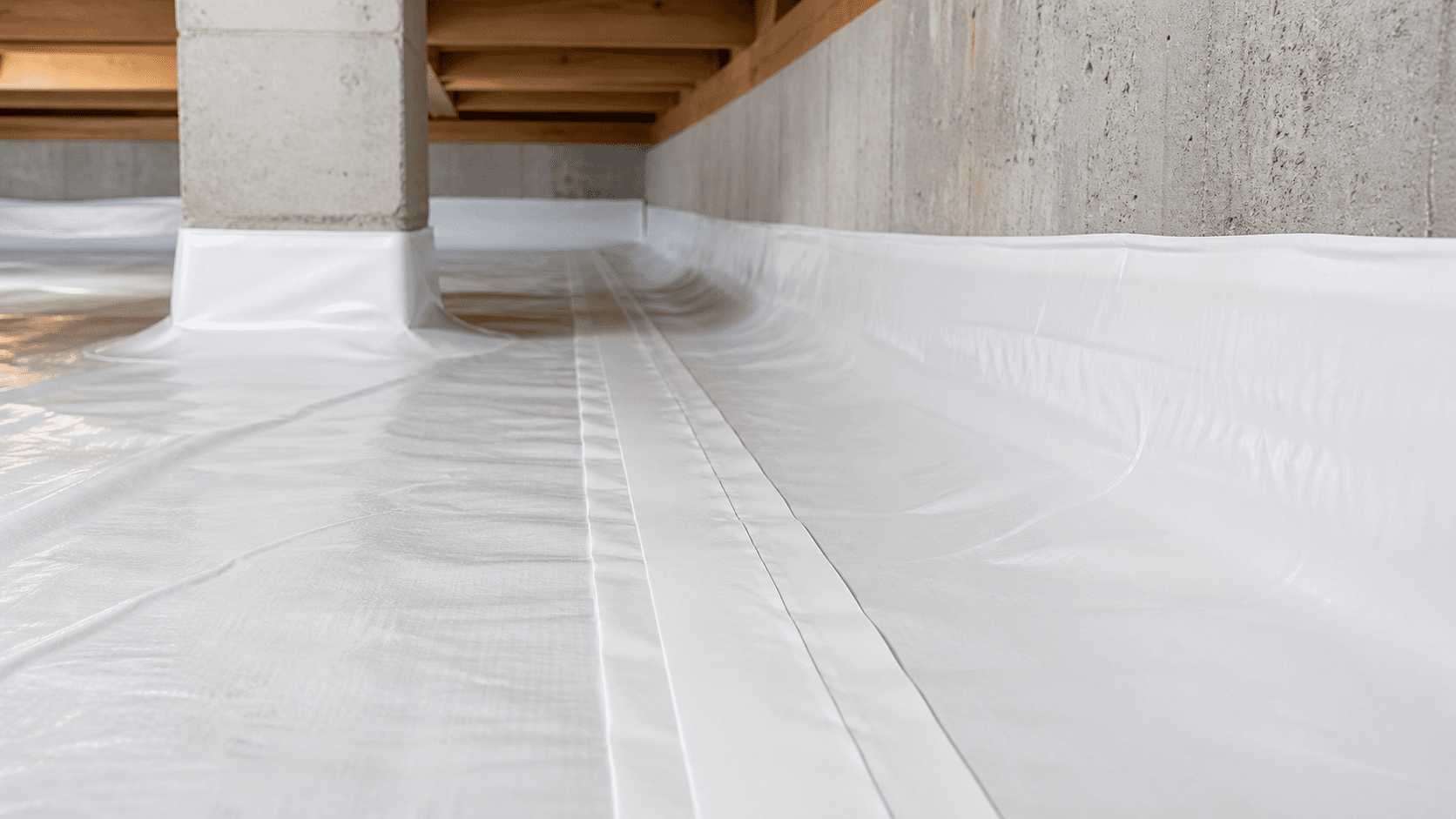
A better vapor barrier installation is continuous, durable, and clear about what is included and what is not.
| Step | What should happen |
|---|---|
| Measure and prepare | Measure square footage, clear debris, note access constraints, and identify water or damage before covering the ground. |
| Address bulk water | Fix active seepage, ponding, downspout discharge, grading problems, or leaks before installing the liner. |
| Install ground cover | Cover exposed soil continuously, overlap seams, and extend material to foundation walls and piers as specified. |
| Seal seams and edges | Tape or seal overlaps, penetrations, and edges so moisture does not bypass the barrier. |
| Protect access paths | Use a durable liner or added protection where homeowners, inspectors, or contractors will crawl. |
| Verify moisture conditions | Check humidity, odor, condensation, and drainage after installation to decide whether more control is needed. |
Comparison
This is the core decision: do you need ground coverage only, or a sealed and managed crawl space?
| Question | Vapor barrier | Encapsulation |
|---|---|---|
| Primary job | Reduce moisture vapor coming from exposed soil | Seal the crawl space and manage moisture from several pathways |
| Typical coverage | Ground surface, sometimes with seams taped | Ground, walls, piers, seams, vents, access points, and penetrations |
| Humidity control | Passive only | Usually active, such as a dehumidifier or another approved method |
| Water control | Does not solve standing water | Still requires drainage or sump work when liquid water is present |
| Best use | Clean, dry crawl spaces that mainly need the soil covered | Humid, musty, damp, vented, or repeatedly problematic crawl spaces |
Choose the comparison based on symptoms, not on the lowest price. If the crawl space is dry and clean, a vapor barrier may be a reasonable lower-cost step. If the home has odor, condensation, high humidity, or repeated moisture findings, compare full encapsulation scope instead.
Read the encapsulation guideMaterial
Thickness is not the only quality factor, but it is one of the easiest quote details for homeowners to compare.
| Thickness | What it means | Where it may fit |
|---|---|---|
| 6 mil | Light-duty minimum in many basic installations | Low-traffic crawl spaces where durability is not a major concern |
| 10 mil | Moderate durability | Better than thin plastic, but still not usually the premium choice |
| 12 mil | Common heavier-duty choice | Many professional vapor barrier and light encapsulation projects |
| 20 mil | Heavy-duty liner | Crawl spaces with frequent access, rough soil, piers, or full encapsulation scope |
A thicker liner is usually more durable under foot traffic, rough soil, debris, and service access. Seams, wall attachment, pier detailing, and preparation still matter. A thick liner installed loosely can perform worse than a moderately thick liner installed carefully.
Good fit
The lower-cost option can be the right option when the crawl space problem is narrow and understood.
The crawl space is dry during normal weather.
There is no standing water, seepage, plumbing leak, or drainage issue.
Wood framing appears dry and stable.
There is no persistent musty odor in the home.
Humidity readings are not consistently elevated.
The main concern is exposed soil or a torn old liner.
Not enough
A ground liner should not be used to hide active problems. These conditions usually need a broader crawl space plan.
Water pools on top of the liner or enters after rain.
Foundation walls show seepage, staining, or repeated dampness.
HVAC ducts sweat or insulation is wet and falling.
The crawl space smells musty even after the ground is covered.
There is mold-like growth, wood rot, pest damage, or sagging flooring.
Open vents continue bringing humid air into the crawl space.
Local context
Triangle crawl spaces often have a combination of exposed soil, humid outdoor air, older vented foundations, HVAC ducts, and seasonal stormwater pressure.
In a humid climate, a ground moisture barrier can help reduce vapor from exposed soil, but open vents and damp foundation walls can still bring moisture into the crawl space. That is why Raleigh-area quotes should separate ground-cover work from vent sealing, dehumidification, drainage, insulation, and wood repair.
Cost
A vapor barrier is usually less expensive than full encapsulation because it covers a narrower scope.
Price depends on crawl space size, access, liner thickness, seam sealing, wall coverage, pier detailing, cleanup, debris removal, and whether water or insulation problems must be corrected first. A basic ground liner is usually the lower-cost path; a sealed crawl space with dehumidification, drainage, and insulation work should be compared as encapsulation.
DIY or pro
Some homeowners can install a basic ground cover, but the decision changes when the crawl space is wet, tight, contaminated, or connected to other repairs.
| Option | When it may fit | Watch-outs |
|---|---|---|
| DIY ground cover | Small, dry, clean crawl space with easy access | Torn seams, poor wall edges, missed water problems, and unsafe crawl space conditions |
| Professional vapor barrier | Larger spaces, rough ground, old liner removal, or quote documentation needed | Confirm thickness, seams, edges, cleanup, and exclusions |
| Professional encapsulation | Odor, humidity, condensation, wet insulation, or recurring moisture | Compare dehumidifier, drainage, insulation, and permit details |
Quote review
The written scope should make it easy to tell whether you are buying a simple liner or a fuller moisture-control system.
What liner thickness will be installed?
Will seams be taped or only overlapped?
Will the liner extend up the walls or stop at the ground edge?
How will piers, pipes, columns, and penetrations be handled?
Will debris, old plastic, and failed insulation be removed first?
What happens if standing water is found before installation?
Is the quote for a vapor barrier only or full encapsulation?
Is vent sealing included, excluded, or not recommended for this scope?
Will humidity be measured before and after installation?
What warranty applies to material, seams, and workmanship?
Mistakes
Most problems come from treating the liner as a shortcut instead of one part of moisture control.
Installing plastic over standing water or mud.
Using thin material in a crawl space that sees regular access.
Leaving seams loose, wrinkled, or widely overlapped without sealing.
Stopping short of walls, piers, pipes, or access doors.
Covering wet insulation, debris, or damaged wood.
Assuming a vapor barrier will control humid air from open vents.
Related pages
Use these next if your crawl space has symptoms beyond exposed soil.
Estimate liner square footage, roll count, seam tape, overlap, and waste.
Learn moreFor full sealed crawl space systems.
Learn moreFor humidity control after sealing.
Learn moreFor standing water and repeated water entry.
Learn moreFor wet, fallen, or replacement insulation decisions.
Learn moreFor odor and humidity symptoms.
Learn moreFor water that needs drainage review first.
Learn moreFAQs
Short answers to common homeowner questions before comparing quotes.
A crawl space vapor barrier covers exposed soil to reduce moisture vapor moving from the ground into the crawl space. It can help keep the crawl space cleaner and drier, but it does not fix standing water, leaks, poor drainage, or humid outdoor air by itself.
For most homeowner searches, moisture barrier and vapor barrier are used to mean the same general thing: a plastic or reinforced liner over the crawl space ground. Contractors may use the terms differently, so the written scope matters more than the label.
It may be enough if the crawl space is dry, odor-free, and mainly has exposed soil. If there is musty odor, high humidity, duct condensation, mold-like growth, wet insulation, or standing water, a vapor barrier alone may be too limited.
Thin 6 mil plastic is common in basic installations, but 12 mil or 20 mil liners are usually more durable. The right thickness depends on access, soil conditions, expected traffic, budget, and whether the work is part of a fuller encapsulation system.
For better moisture control, seams and penetrations should usually be sealed rather than loosely overlapped. Loose plastic can shift, tear, collect dirt, and allow vapor to bypass the barrier.
A basic vapor barrier is usually less expensive than full encapsulation because it has a narrower scope. Pricing depends on size, thickness, cleanup, access, wall coverage, seam sealing, and whether water or insulation problems must be addressed first.
Sources
This page uses homeowner moisture-control guidance, building-science references, and current vapor barrier comparison-page patterns. It should be updated as local quote examples and field photos are collected.
Last reviewed: July 29, 2026.