| Inspect the crawl space | Check moisture, standing water, ducts, vents, framing, pests, and existing insulation | The cause of failure should be understood before replacement |
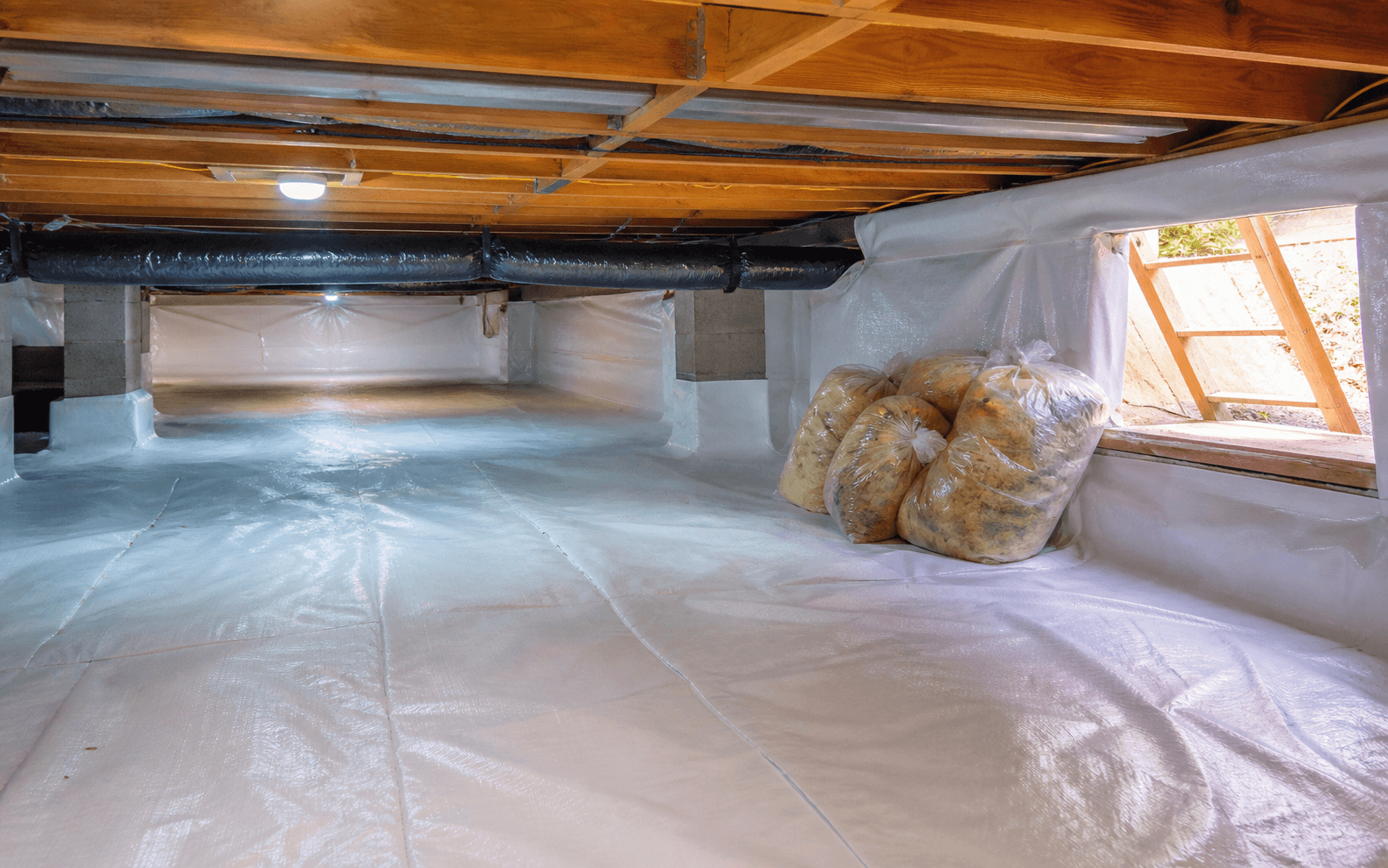
| Remove damaged insulation | Bag and dispose of wet, fallen, contaminated, or disconnected material | Old insulation can hold odor, moisture, debris, and hidden damage |
| Clean and prepare the area | Clear debris and review vapor barrier, access, duct, and air-sealing needs | Prep work helps prevent the same problem from returning |
| Fix moisture sources first | Address water entry, exposed soil, duct condensation, plumbing leaks, or high humidity | New insulation should not be installed into an active moisture problem |
| Choose floor or wall insulation | Match the insulation location to a vented or sealed crawl space design | The thermal boundary needs to make sense for the whole crawl space |
| Install and verify | Install the chosen material, supports, sealing details, and final checks | Insulation should stay dry, supported, and in contact with the intended surface |