CrawlSpace Guide
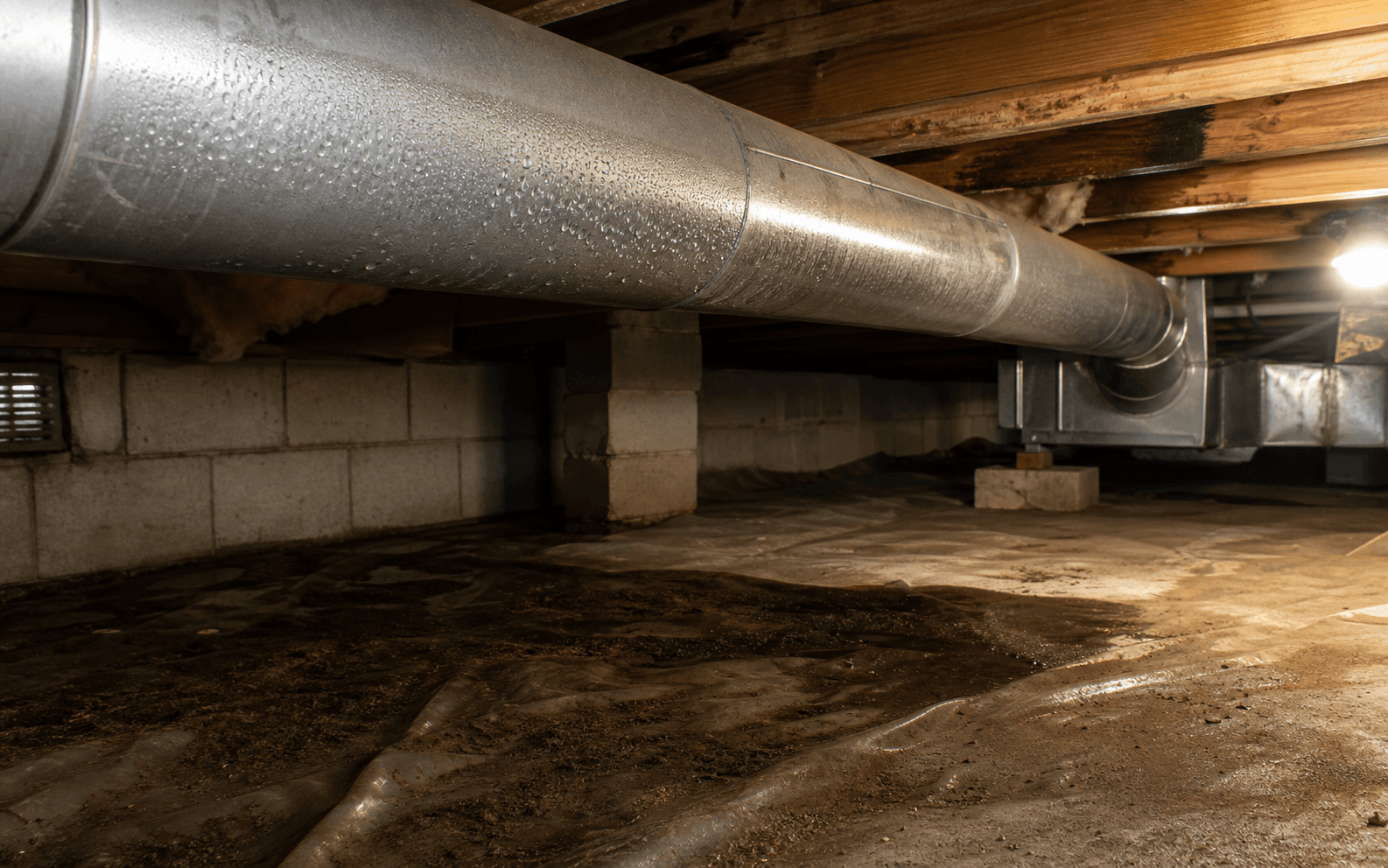
Humidity meter and condensation signs in a damp crawl space

Crawl space moisture guide

What Should Crawl Space Humidity Be?

Humidity is how crawl space moisture is measured. A useful target is not a perfect single number — it is a range, a trend, and a set of visible clues that tell you whether moisture in the crawl space is under control.

Humidity range

Crawl space humidity chart

Relative humidity changes with temperature, season, and recent weather. Use this chart as a practical homeowner guide, then compare the number with what you can see and smell.

ReadingWhat it usually meansWhat to do next
Below 40% RHDry for most crawl spacesUsually low moisture risk, but do not chase very low numbers just to make the space feel perfect.
40-55% RHPractical target rangeA good working range for many sealed or controlled crawl spaces, especially when readings stay steady.
55-60% RHBorderline watch zoneCheck trends, weather, vents, vapor barrier condition, and whether odor or condensation is present.
60-70% RHToo high to ignore if sustainedLook for moisture sources and consider whether vapor control, drainage, sealing, or dehumidification is missing.
Above 70% RHStrong moisture warningRepeated readings in this range deserve prompt attention, especially with wet insulation, staining, odor, or wood moisture.
Wet surfaces or standing waterLiquid water problemFix drainage, leaks, seepage, or discharge problems before relying on a dehumidifier.

Why the number matters

Why 60% is the line to watch

The goal is not to make the crawl space bone dry. The goal is to keep the space from staying damp long enough to affect wood, insulation, metal, odors, and indoor air comfort.

Below 60% is a control goal, not a guarantee.

EPA guidance for indoor spaces recommends keeping relative humidity below 60% and ideally in the 30-50% range where practical. Crawl spaces are not living rooms, but the same moisture principle matters: long damp periods create better conditions for odor, condensation, pests, corrosion, and mold-like growth.

In a sealed crawl space, many homeowners and contractors aim near 45-55% RH because it gives a buffer below 60% without forcing equipment to chase an unnecessarily low number.
Around 70% is a stronger warning.

Building America guidance flags air relative humidity above 70% as a bad crawlspace sign, especially when it appears with high wood moisture or visible deterioration. Building Science Corporation also explains that high relative humidity near surfaces, especially around 70% or higher, can support mold and other moisture-related problems.

That does not mean one brief spike proves damage. It means repeated readings in that range deserve a closer look.

Measuring

How to measure crawl space humidity without fooling yourself

A cheap hygrometer is useful, but only if you treat the reading as a trend instead of a one-time verdict.

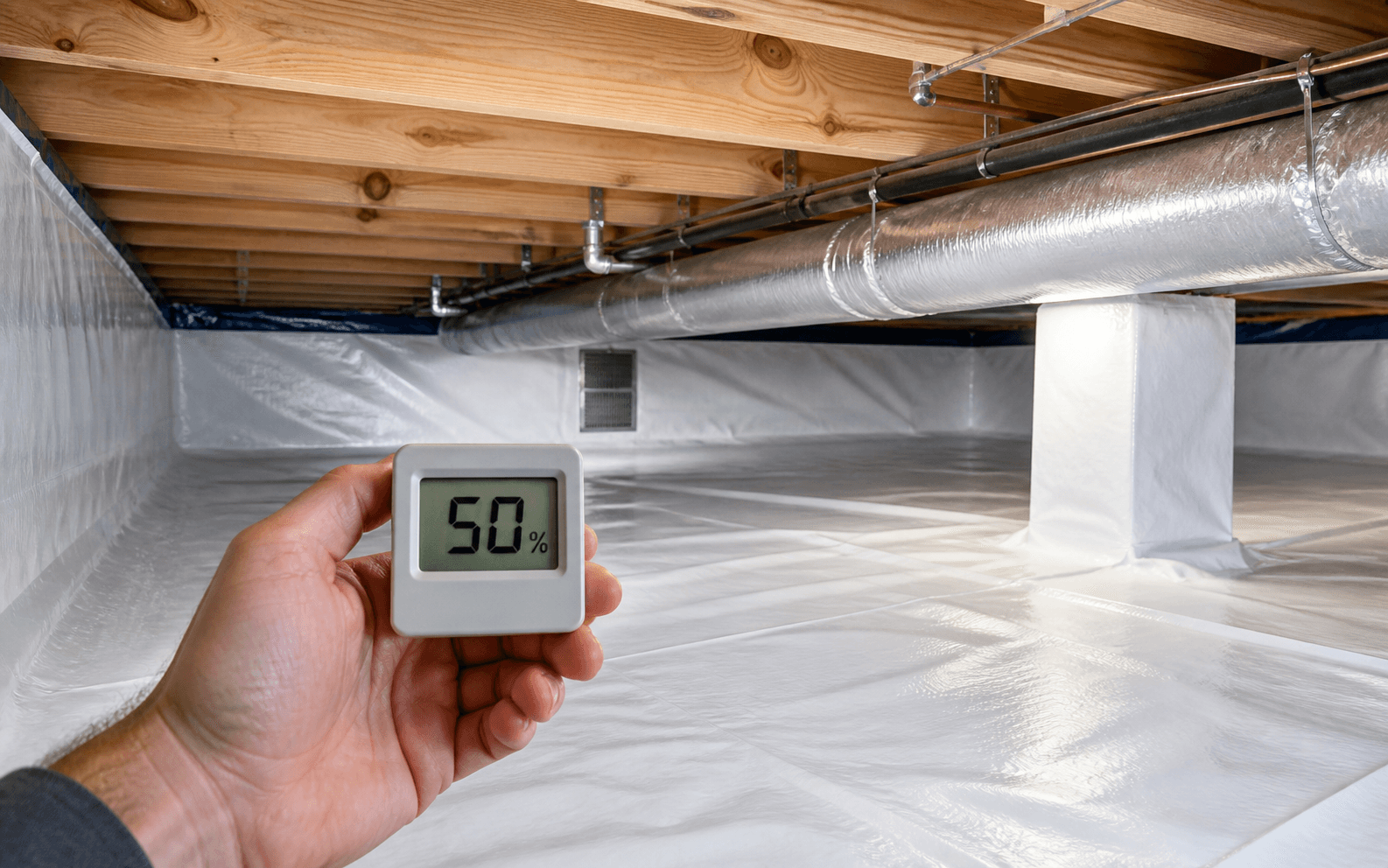
A hygrometer reading 50% relative humidity in a clean, encapsulated crawl space
A hygrometer helps you track relative humidity over time. Place it away from direct airflow and take more than one reading before drawing conclusions.

Put a digital hygrometer near the crawl space access and let it sit long enough to stabilize.

Record the date, outdoor weather, recent rain, and whether the HVAC system has been running.

Take a second reading deeper in the crawl space if it is safe and easy to access.

Look for condensation on ducts, pipes, insulation, foundation walls, or the access door.

Check whether the ground cover is missing, torn, loose at seams, or holding water on top.

Compare the air reading with visible clues: odor, wet insulation, wood staining, rust, or muddy soil.

SituationHow to read itBetter next step
One reading after a stormA clue, not a diagnosisMeasure again after 24-48 hours and note whether soil, walls, or insulation are still damp.
Repeated readings above 60%Persistent moisture loadCheck exposed soil, vents, drainage, duct condensation, and whether a dehumidifier is installed and draining.
High RH with condensationDew point or cool-surface issueLook at ducts, pipes, foundation walls, rim joists, and the access door for cold surfaces collecting moisture.
High RH with musty odorMoisture plus organic materialCheck insulation, debris, floor joists, sill plates, and vapor barrier seams before assuming odor is only an air problem.
Good RH but wet materialsWater problem may be separateA dry air reading does not rule out a leak, seepage path, plumbing issue, or localized wet wood.

Vented vs sealed

Vented and encapsulated crawl spaces behave differently

The same humidity number can mean different things depending on whether the crawl space is open to outdoor air or intentionally sealed and controlled.

Vented crawl spaces swing with the weather.

In a humid climate, outside air can raise crawl space humidity quickly. A vented crawl space may look acceptable one day and damp the next, especially after rain or during warm months when humid air meets cooler surfaces below the home.

If readings repeatedly rise above 60%, do not assume more venting is the answer. Check ground cover, drainage, ducts, and whether the vents are bringing in more moisture than they remove.

Sealed crawl spaces should be steadier.

A sealed or encapsulated crawl space should usually have fewer outdoor humidity swings. If it still stays above 60%, look for incomplete sealing, missing wall coverage, ground vapor, standing water, poor dehumidifier drainage, or equipment that is too small for the moisture load.

IRC crawl space provisions treat vapor control and a moisture-management method as part of the unvented crawl space approach, which is why a complete system matters more than one product.

Causes

What keeps crawl space humidity high?

High humidity is usually a source problem. The best fix depends on whether moisture is coming from soil, outdoor air, water entry, HVAC equipment, or incomplete previous work.

Likely sourceUsual repair directionWhy it matters
Bare soil or torn ground coverVapor barrier repair or replacementGround moisture can keep adding water vapor even when the soil looks dry.
Open vents in humid weatherVent strategy reviewWarm humid outdoor air can enter and raise RH when it contacts cooler crawl space surfaces.
Standing water or wet wallsDrainage or leak correctionLiquid water should be solved before sealing the crawl space or sizing drying equipment.
Duct condensationHumidity control plus duct reviewCool HVAC surfaces can collect moisture when crawl space air is humid.
Encapsulated space still above 60%Dehumidifier sizing, drainage, or air sealing reviewA sealed crawl space still needs a complete moisture-control plan.
Wet insulation or damp woodMoisture source correction before replacementReplacing materials before drying the source can hide a repeating problem.

Do not skip this

Fix water before chasing the humidity number

A dehumidifier is a useful tool, but it is not a substitute for water control.

The right order prevents repeat problems.

  1. 1. Remove or control liquid water. Address standing water, wall seepage, plumbing leaks, sump discharge, downspouts, grading, or drainage failures first.
  2. 2. Block ground vapor. Repair or install a continuous vapor barrier so exposed soil is not constantly feeding moisture into the air.
  3. 3. Reduce humid air entry. Review vents, access doors, rim gaps, duct leakage, and incomplete encapsulation details.
  4. 4. Dry and control the air. Use a crawl-space-rated dehumidifier or approved conditioning strategy when the remaining moisture load requires it.
  5. 5. Replace damaged materials last. Insulation, wood repairs, and cleanup should not hide an active moisture source.

Avoid quick fixes that hide water.

  • Do not cover standing water with plastic and call it fixed.
  • Do not install new insulation against damp framing.
  • Do not rely on a bucket dehumidifier that nobody drains.
  • Do not identify mold species or health risk from appearance alone.

Next steps

Use the humidity reading to choose the right next page

The number matters, but the repair path depends on where the moisture is coming from.

FAQs

Crawl space humidity questions

Short answers for homeowners checking a hygrometer reading or comparing repair recommendations.

What should crawl space humidity be?

A practical target is about 45-55% relative humidity in a controlled crawl space, with 60% RH as the upper line to avoid for long periods. Repeated readings above 60% should be investigated, especially with odor, condensation, wet insulation, or visible staining.

Is 60% humidity too high for a crawl space?

A single 60% reading is not an emergency, but 60% is the point where you should pay attention. If the crawl space stays at or above 60%, check moisture sources rather than only lowering the dehumidifier setting.

Is 70% humidity in a crawl space bad?

Sustained readings around 70% or higher are a stronger warning sign. Building-science guidance treats high surface humidity around this range as favorable for mold and moisture-related deterioration, especially when materials stay damp.

What should humidity be in an encapsulated crawl space?

Many encapsulated crawl spaces are managed around 45-55% RH. The exact setting depends on temperature, equipment, drainage, and site conditions, but the space should generally stay below 60% for long periods.

Is crawl space moisture the same as crawl space humidity?

They are related but not identical. Humidity is the measurement — the share of water vapor the air is holding, read as relative humidity. Crawl space moisture is the broader condition, and it includes liquid water the humidity reading may not capture: ground vapor, seepage, plumbing leaks, and duct condensation. A hygrometer is how you measure moisture in a crawl space day to day, but a normal reading does not rule out standing water.

What causes moisture in a crawl space?

Most crawl space moisture comes from four sources: vapor rising from bare soil, water entering from outside through grading or drainage, condensation on cool surfaces and ducts in warm humid weather, and plumbing leaks. Humidity readings tell you the space is damp; they do not tell you which source is responsible. Look for standing water or damp soil first, because a dehumidifier cannot correct a drainage or leak problem on its own.

Can a vapor barrier lower crawl space humidity?

Yes, when ground vapor is a major source. A vapor barrier will not solve active water entry, poor drainage, duct condensation, plumbing leaks, or an undersized dehumidifier by itself.

Do I need a dehumidifier if my crawl space is humid?

A dehumidifier can help after moisture sources are reduced, especially in a sealed or encapsulated crawl space. It should not be the first fix for standing water, leaks, or drainage problems.

Sources

Research notes and review date

These references support the humidity ranges, measurement cautions, and crawl space moisture-control recommendations on this page.

Last reviewed: August 20, 2026.

Still have a question about this?

A person reads every one of these and writes back — usually within a couple of days. Your email doesn't go to anyone else.