CrawlSpace Guide

Understand crawl space design

Vented vs. Unvented (Sealed) Crawl Spaces

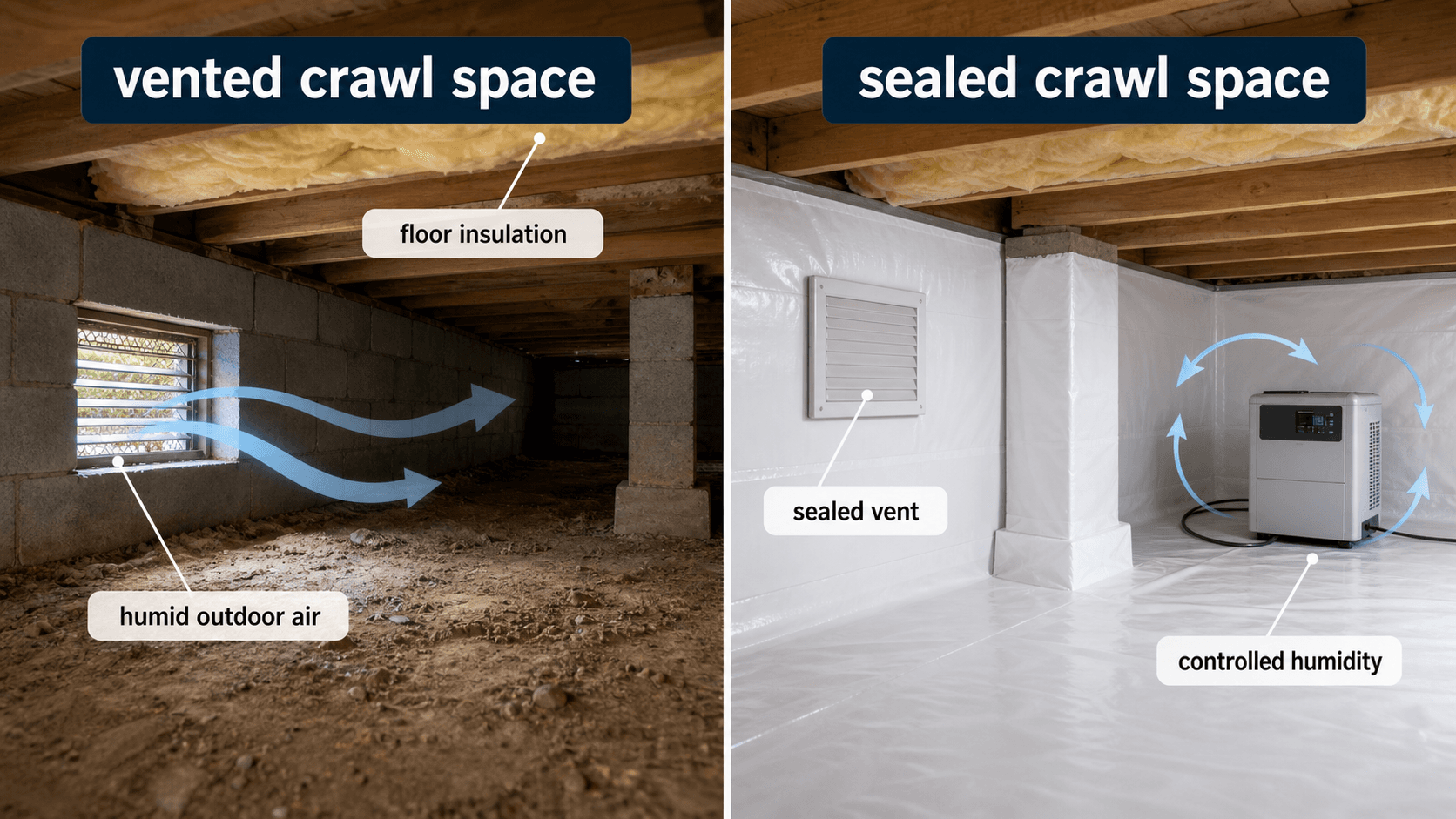
A vented crawl space treats the area below the floor as an outside space. An unvented crawl space — also called a sealed or closed crawl space — closes the vents, covers the ground, and manages humidity as part of a controlled moisture strategy.

Quick answer

  • In humid climates, open vents can bring moisture-laden outdoor air into the crawl space. An unvented (sealed or closed) crawl space can reduce that pathway, but only when soil vapor, drainage, insulation, and humidity control are handled correctly.

Use this as a planning guide before comparing written contractor scopes.

Visual guide

See the decision at a glance

Use this visual to orient the page before comparing the details in the sections below.

Side-by-side crawl space comparison showing humid outdoor air entering a vented crawl space and controlled humidity in a sealed crawl space

Watch

Vented vs. sealed, explained

A short walkthrough of what each design is, and why venting can work against you in humid weather.

Design difference

Open-air crawl space vs. controlled crawl space

The repair choice changes how moisture, air, and insulation are handled.

Method or itemWhat it meansWhat to check
Foundation ventsOpen seasonally or year-round (vented)Closed or sealed (unvented)
Ground moistureMay have thin or incomplete plasticCovered with sealed liner
Insulation locationOften under the floorOften at walls or rim areas
Humidity strategyRelies on outdoor air exchangeUses dehumidifier, supply air, or another approved method
Main riskHumid air and condensationPoor sealing or no active humidity plan

Humid climate

Why vents can backfire in Raleigh, Cary, and Apex

Foundation vents are intended to move air, but the quality of that air matters.

Warm outdoor air can carry high moisture into the crawl space.

Cool ducts and surfaces can become condensation points.

Fiberglass insulation may sag or hold moisture when the crawl space stays damp.

Musty odor can move upward through floor gaps, chases, and duct leakage.

Closing vents without a full moisture-control plan can create new problems.

Before closing vents

What must be checked first

A sealed crawl space should be planned as a system, not as a single vent-cover purchase.

Exposed soil is covered and seams are sealed.

Bulk water, leaks, and drainage paths are understood.

Humidity-control method is selected and documented.

Insulation location and code requirements are reviewed.

Electrical, HVAC, and permit responsibilities are clear.

Related guides

Keep going through the encapsulation cluster

These supporting pages help you compare scope, humidity control, quote language, and warranty details without treating encapsulation as a one-size-fits-all package.

FAQs

Vented vs. Sealed FAQs

Short answers to common homeowner questions before comparing quotes.

Is an unvented crawl space the same as a closed or sealed crawl space?

In everyday use, yes. "Unvented," "closed," and "sealed" crawl space all describe the same basic approach: the foundation vents are closed, the exposed ground is covered, and humidity is managed instead of relying on outdoor air exchange. "Vented" is the opposite — the area under the floor is left open to outside air. The labels vary by region and contractor, but the vented-versus-unvented decision is really about whether outdoor air or a controlled moisture plan keeps the crawl space dry.

Should crawl space vents be open or closed?

It depends on the crawl space design, climate, moisture conditions, and local requirements. In humid areas, open vents can add moisture, but closing them should be part of a complete sealed crawl space plan.

Is a sealed crawl space the same as encapsulation?

They are closely related. Encapsulation is one common way to create a sealed crawl space, usually with a ground liner, wall coverage, vent sealing, and humidity control.

Can closing vents cause mold-like growth?

Closing vents without ground coverage, water control, and humidity management can leave moisture trapped. A qualified contractor should explain how humidity will be controlled after sealing.

Sources

References and review date

These pages are educational planning guides. Use qualified professionals for site-specific structural, mold, electrical, HVAC, code, or health questions.

Not sure this is the right fix?

A person reads every one of these and writes back — usually within a couple of days. Your email doesn't go to anyone else.