Is a lifetime encapsulation warranty always better?
Not necessarily. The term matters less than what is covered, what is excluded, who honors the warranty, and what maintenance is required.
Evaluate warranty and scope
A warranty is only useful when you know what it covers, who honors it, and what maintenance is required. Encapsulation warranties should be tied to clear scope, materials, and exclusions.
Use this as a planning guide before comparing written contractor scopes.
Visual guide
Use this visual to orient the page before comparing the details in the sections below.
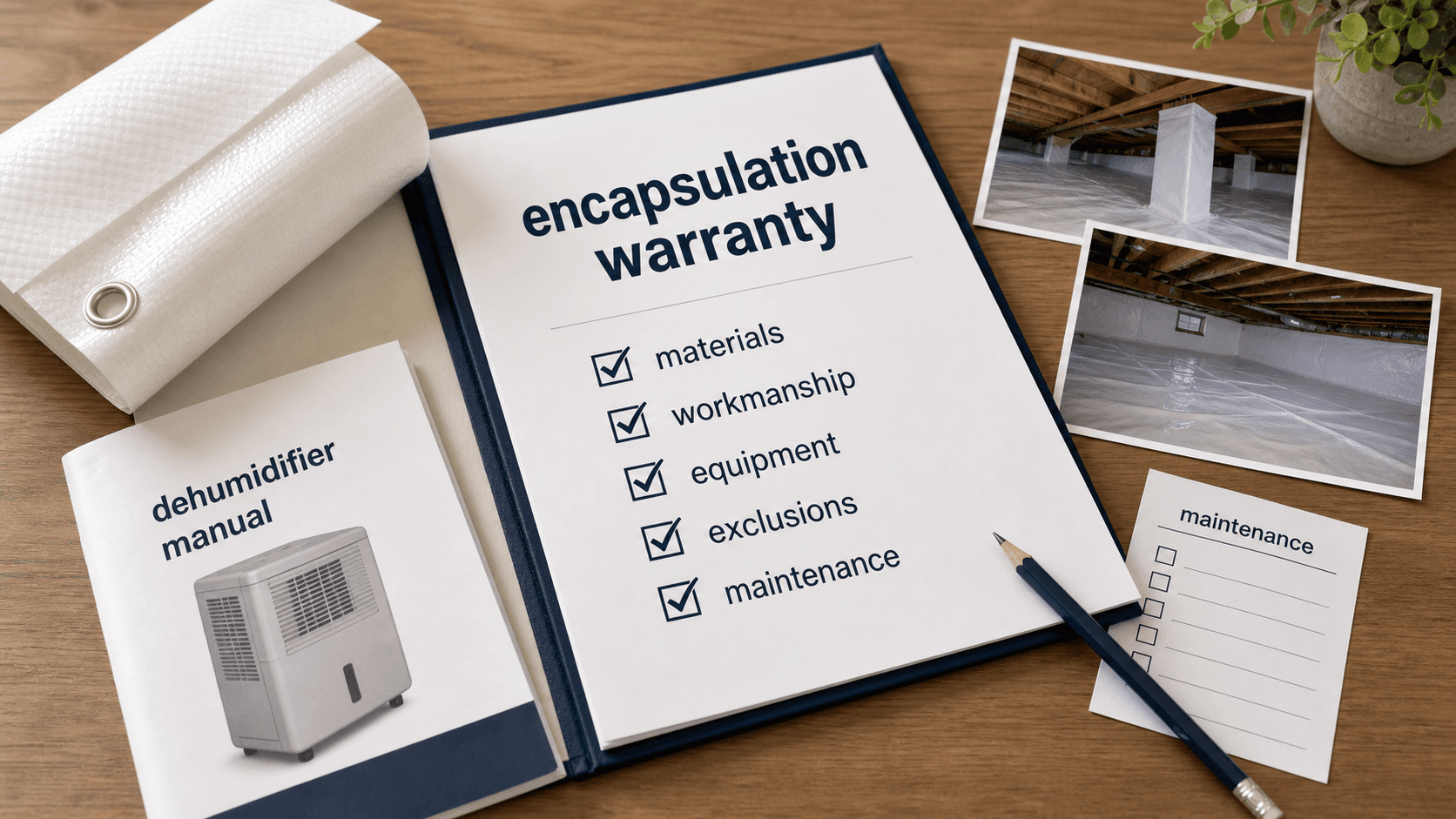
Coverage
The best warranty language is specific enough to compare later.
Vapor barrier brand, thickness, and material coverage.
Seam taping, wall attachment, pier wrapping, and vent sealing workmanship.
Dehumidifier model, manufacturer warranty, drain method, and service access.
Sump pump, drainage, discharge line, and backup equipment coverage when included.
Transferability, term length, claim process, and who performs repairs.
Exclusions
Exclusions are not always bad, but they should be clear before you sign.
Standing water from exterior drainage, grading, plumbing leaks, or flooding.
Damage caused by pests, trades, storage, foot traffic, or homeowner modifications.
Mold-like growth, odor, indoor air quality, or health-related claims.
Structural wood damage unrelated to the encapsulation installation.
Equipment failure when filters, drains, pumps, or power are not maintained.
Maintenance
Maintenance requirements should be realistic and visible in the handoff documents.
Check dehumidifier filters and drain line condition.
Test sump pump operation where a pump is included.
Keep access clear so equipment can be serviced.
Avoid storing sharp or heavy items on liner surfaces.
Watch for new exterior drainage, gutter, plumbing, or HVAC problems.
Proof
A simple folder of records can make later service, resale, or warranty questions much easier.
Signed scope of work and warranty terms.
Product names, liner thickness, model numbers, and serial numbers.
Before and after photos.
Permit records when applicable.
Maintenance instructions and service schedule.
Related guides
These supporting pages help you compare scope, humidity control, quote language, and warranty details without treating encapsulation as a one-size-fits-all package.
Weigh the real benefits and drawbacks and get a plain verdict on whether it is worth it.
Read guideKnow when a ground liner is enough and when a sealed system is the better scope.
Read guideCompare open foundation vents with a closed, humidity-managed crawl space.
Read guideSee how active drying, supply air, and exhaust approaches differ after sealing.
Read guideUse a homeowner checklist before approving a crawl space encapsulation quote.
Read guideFAQs
Short answers to common homeowner questions before comparing quotes.
Not necessarily. The term matters less than what is covered, what is excluded, who honors the warranty, and what maintenance is required.
Usually yes. Dehumidifiers, pumps, and alarms often have manufacturer warranties that differ from workmanship or liner coverage.
Be careful with mold or health claims. A warranty should not be treated as a promise about mold species, medical outcomes, or conditions caused by new water sources.
Sources
These pages are educational planning guides. Use qualified professionals for site-specific structural, mold, electrical, HVAC, code, or health questions.