How many encapsulation quotes should I get?
Two or three written quotes can help you compare scope, but only if each quote describes materials, prep, drainage, dehumidification, exclusions, and warranty details.
Prepare for contractor quotes
A good encapsulation quote should explain the problem, the sequence, the materials, the exclusions, and the maintenance plan. Use these questions before approving the work.
Use this as a planning guide before comparing written contractor scopes.
Visual guide
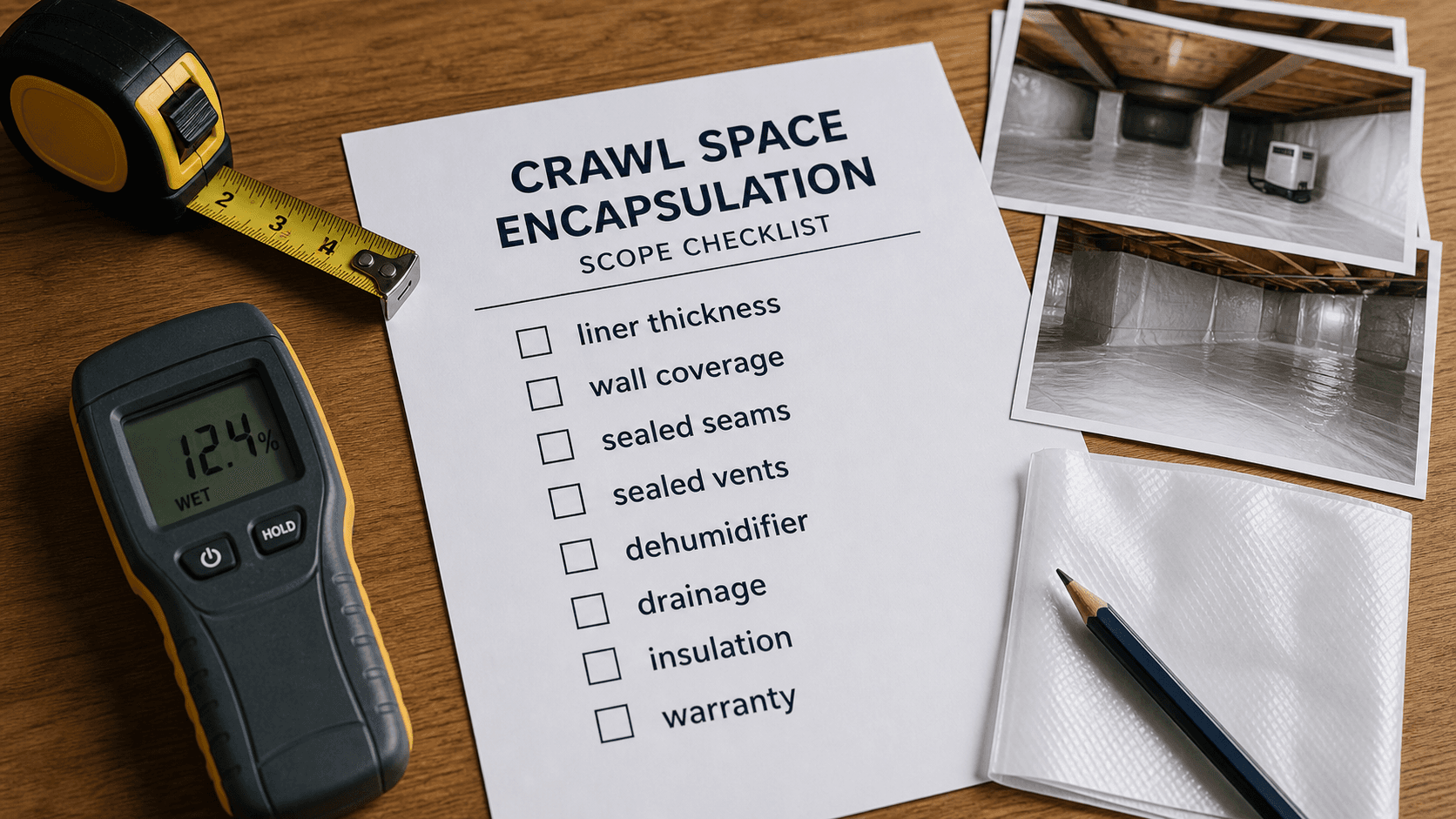
Use this visual to orient the page before comparing the details in the sections below.
Inspection
The quote should start with observations, not just a package name.
What moisture readings were taken, and where?
Was standing water, seepage, plumbing leakage, or HVAC condensation found?
Are there photos of the conditions the quote is based on?
Is old insulation wet, fallen, missing, or contaminated?
Are there wood rot, pest, or structural concerns that need separate review?
Scope
Make the contractor define exactly what the word encapsulation means in the proposal.
What liner thickness and material will be installed?
Will the liner cover the ground only, or also walls and piers?
How will seams, corners, penetrations, access doors, and vents be sealed?
Is wall insulation, rim insulation, or floor insulation included?
What work is excluded from the price?
Drying plan
A sealed crawl space still needs moisture management after installation.
Is a dehumidifier included, and what model is specified?
Where does condensate drain, and what happens during power loss?
Is drainage or a sump pump needed before encapsulation?
How will the contractor verify humidity after the system is installed?
Who maintains the equipment, filter, drain line, and pump?
Paper trail
Good documentation matters after the crew leaves.
Who handles permits if electrical, HVAC, sump pump, or moisture-control changes are included?
What warranty covers materials, workmanship, and equipment?
What maintenance is required to keep coverage valid?
Will you receive photos, model numbers, and a final checklist?
What conditions would make this quote change after work begins?
Related guides
These supporting pages help you compare scope, humidity control, quote language, and warranty details without treating encapsulation as a one-size-fits-all package.
Weigh the real benefits and drawbacks and get a plain verdict on whether it is worth it.
Read guideKnow when a ground liner is enough and when a sealed system is the better scope.
Read guideCompare open foundation vents with a closed, humidity-managed crawl space.
Read guideSee how active drying, supply air, and exhaust approaches differ after sealing.
Read guideUnderstand what should be written into material, workmanship, and equipment coverage.
Read guideFAQs
Short answers to common homeowner questions before comparing quotes.
Two or three written quotes can help you compare scope, but only if each quote describes materials, prep, drainage, dehumidification, exclusions, and warranty details.
A vague one-line package, no liner thickness, no humidity-control plan, no answer about standing water, or pressure to sign before reviewing the written scope should slow the process down.
Yes. Photos help connect the quoted work to the actual crawl space condition and make it easier to compare proposals.
Sources
These pages are educational planning guides. Use qualified professionals for site-specific structural, mold, electrical, HVAC, code, or health questions.