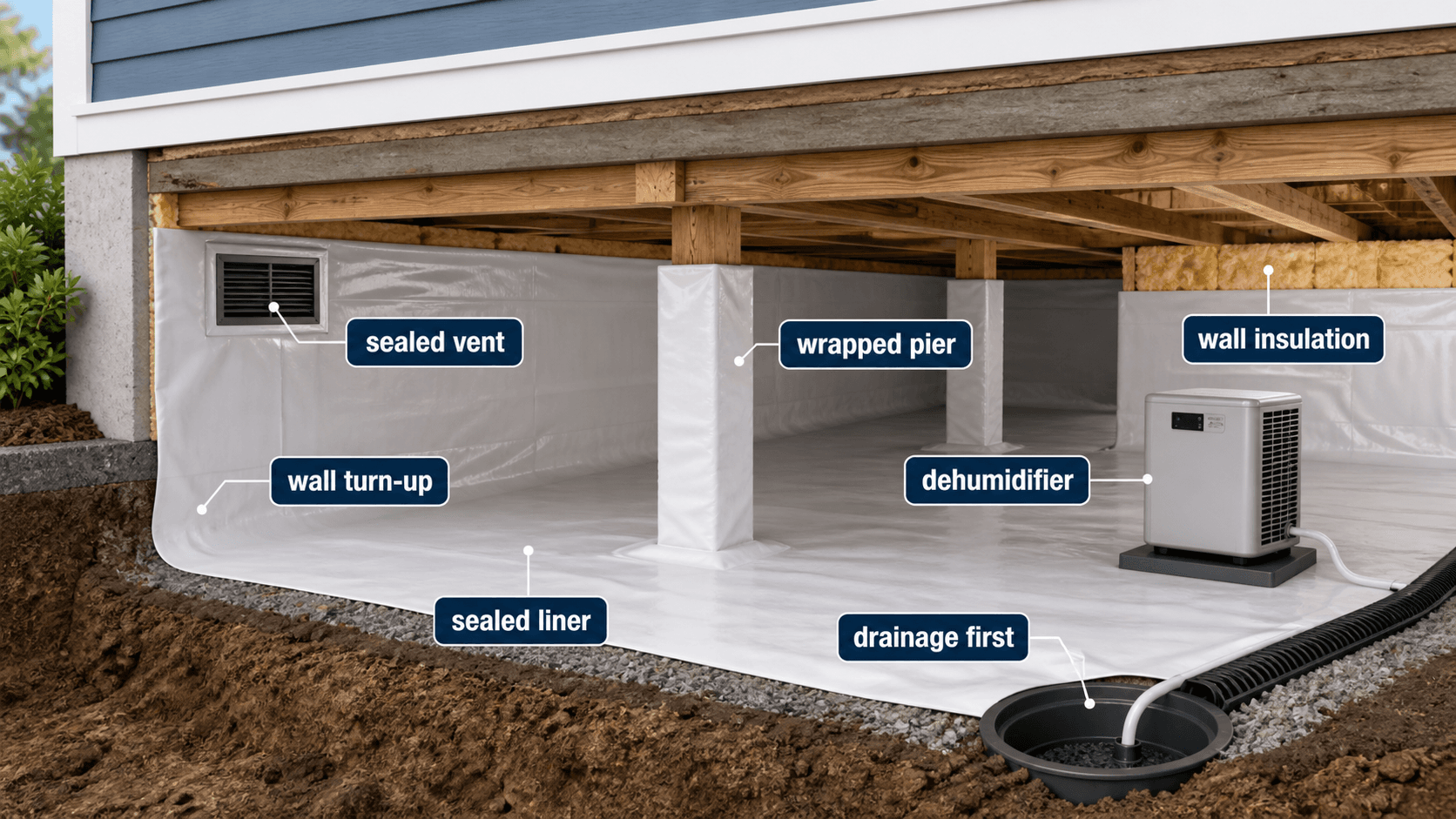
Encapsulation can be one of the best moisture fixes for a damp crawl space, or an expensive answer to a problem you do not have. The value depends on your crawl space, not on the brochure.
Encapsulation's real pros are controlling moisture, mold, humidity, and wood rot, plus better comfort and some energy savings. Its cons are high cost, ongoing dehumidifier upkeep, and safety issues like radon and combustion backdraft if not handled. It is usually worth it for a persistently damp crawl space, but not before fixing active water, and not for energy savings alone.
Use this as a planning guide before comparing written contractor scopes.
Visual guide
See the decision at a glance
Use this visual to orient the page before comparing the details in the sections below.
Watch
The pros and cons, explained
A short walkthrough of the trade-offs and when encapsulation is actually worth it.
The upside
The pros, at a glance
Most of encapsulation's value comes from one thing, a drier crawl space, and the rest follows from it.
Benefit
What it actually does for you
Moisture and mold control
Seals ground vapor and closes vents so the crawl space stays dry, the core reason most homes encapsulate
Lower humidity and comfort
A sealed, dehumidified space cuts the musty, damp air that migrates up into the rooms above
Protects wood and structure
Drier framing resists rot, and insulation and ducts stop soaking up moisture
Pest and odor reduction
Sealed vents and a full liner make the space less hospitable to rodents and insects
Better indoor air
Less crawl space air, and whatever is in it, gets drawn up into the living space
Some energy savings
Building America research reports up to about 20% heating and cooling savings in sealed, insulated crawl spaces
Possible resale appeal
A dry, encapsulated crawl space can reassure buyers and inspectors, though it rarely returns its full cost
As a planning range, complete crawl space encapsulation commonly falls around $5,000 to $15,000 (roughly $3 to $10 per square foot), with wet or repair-heavy crawl spaces costing more. These are planning estimates, not quotes. Size, access, moisture repairs, and dehumidifier choice move the number most.
Handle standing water, grading, downspouts, and leaks before anything is sealed.
Confirm the framing is dry and any rot or structural sagging is addressed on its own.
Have combustion appliances checked for sealed-combustion or direct-vent operation.
Only then weigh a vapor barrier against full encapsulation for the remaining vapor and humidity.
Related guides
Keep going through the encapsulation cluster
These supporting pages help you compare scope, humidity control, quote language, and warranty details without treating encapsulation as a one-size-fits-all package.
Short answers to common homeowner questions before comparing quotes.
Is crawl space encapsulation worth it?
For a crawl space with persistent humidity, musty odor, or damp framing, it usually is, because that is the moisture problem it is built to solve. It is not worth it before fixing active water or drainage, and not for the energy savings alone, which typically take 15 or more years to pay back.
What are the disadvantages of crawl space encapsulation?
The main drawbacks are high upfront cost, an ongoing dehumidifier to power and maintain, radon and soil-gas changes that should be tested for, and combustion-appliance backdraft risk if a gas furnace or water heater is not sealed-combustion or direct-vent. Done over unaddressed water, it can also trap moisture.
Does crawl space encapsulation cause mold?
Not when it is done correctly. Encapsulation prevents mold by keeping the space dry. Mold problems come from sealing over active water or skipping humidity control, which traps moisture, which is why water must be handled and a dehumidifier or conditioned air is usually part of the system.
Does an encapsulated crawl space need a dehumidifier?
Usually yes, especially in a humid climate. Sealing keeps most outside moisture out, but a crawl space dehumidifier is commonly needed to hold humidity down year-round. It is an ongoing cost to plan for, including power, maintenance, and eventual replacement.
Can encapsulation cause radon or carbon-monoxide problems?
It can change the risk, which is why both are checked. Sealing alters how soil gas moves, so radon should be tested before and after. And any gas furnace or water heater in the space must be sealed-combustion or direct-vent so it cannot backdraft carbon monoxide once the crawl space is closed.
Sources
References and review date
These pages are educational planning guides. Use qualified professionals for site-specific structural, mold, electrical, HVAC, code, or health questions.