Do I need a sump pump in my crawl space?
You may need one if water collects in a low point, drainage lines need a place to discharge, or gravity drainage is not practical. A sump pump should be part of a drainage plan, not the only explanation.
Water-control service guide
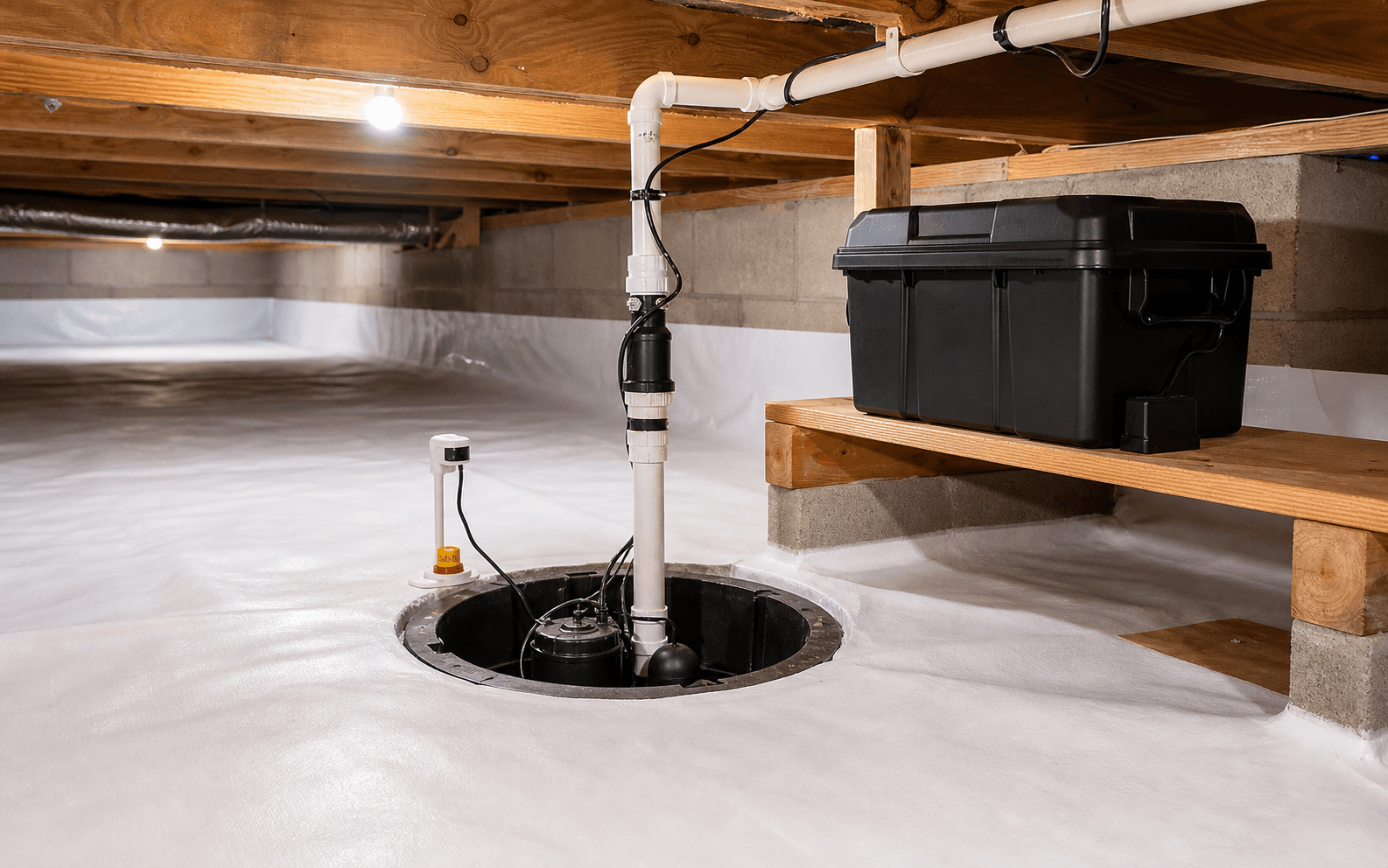
A crawl space sump pump collects water in a basin and pumps it away from the home. It is most useful when drainage lines need a low point to discharge or water collects where gravity drainage is not practical.
Decision first
A pump solves the discharge problem. It does not explain why water is entering in the first place.
| Condition | What it suggests | Best next step |
|---|---|---|
| Water collects in one low area | A basin and pump may be useful | Confirm drainage path to basin |
| Interior drain line is recommended | Water needs a discharge point | Compare pump, basin, and discharge details |
| Power outages happen during storms | Backup may matter | Discuss battery backup and alarm |
| Water enters from gutters/grading | Exterior correction may reduce load | Fix runoff before relying only on pump |
| No standing water, only humidity | Pump may not be needed | Review vapor barrier and humidity control |
System fit
A sump pump is usually one component inside a larger water-management plan.
| Item | What it does | What it does not do |
|---|---|---|
| Drainage system | Collects and routes water | Does not lift water without a pump when gravity is unavailable |
| Sump pump | Pumps collected water out | Does not collect water across the crawl space by itself |
| Discharge line | Carries water away | Does not help if water is discharged back near the foundation |
| Battery backup | Helps during outages | Does not replace maintenance |
| Vapor barrier | Reduces vapor from soil | Does not remove liquid water |
Installation
A complete quote should explain basin, pump, power, discharge, backup, and maintenance access.
Sump basin sized for the crawl space water load
Sealed or secure basin cover
Submersible pump with appropriate capacity
Check valve to reduce backflow
Discharge line routed away from foundation
GFCI-protected power where required
Optional battery backup or high-water alarm
Clear maintenance and testing instructions
Types
The right choice depends on water volume, outage risk, access, and how serious the consequences are if the pump fails.
| Option | Best fit | Watch-outs |
|---|---|---|
| Submersible pump | Most crawl space sump basins | Needs basin access and periodic testing |
| Pedestal pump | Some larger/open pits | Less common in tight crawl spaces |
| Battery backup | Storm outages or high-risk water return | Battery maintenance and replacement |
| Alarm | Early warning for high water | Only useful if someone responds |
| Combo system | Primary plus backup in one plan | Higher cost but more resilience |
Cost
Costs depend on scope and site conditions. Use ranges for planning, not as contractor quotes.
Cost depends on basin installation, pump type, discharge route, check valve, electrical work, backup power, alarm, and whether interior drainage lines are included.
Compare pump and drainage costsQuote review
Good quotes make the water path, discharge point, exclusions, and sequence clear.
What water path leads to the basin?
What pump capacity is being installed?
Is the basin covered and accessible?
Where does the discharge line terminate?
Is a check valve included?
Is electrical work included?
Is battery backup or alarm recommended?
How should the pump be tested and maintained?
Related pages
Use these pages to compare symptoms, repairs, and cost planning.
FAQs
Short answers to common homeowner questions before comparing repair options.
You may need one if water collects in a low point, drainage lines need a place to discharge, or gravity drainage is not practical. A sump pump should be part of a drainage plan, not the only explanation.
The discharge should move water safely away from the foundation to an approved location. It should not recycle water back toward the crawl space or create a problem for neighboring property.
A backup can be useful where power outages or pump failure would allow water to return quickly. Battery backup and alarms should be discussed for higher-risk crawl spaces.
It should be tested periodically, especially before wet seasons and after storms. The basin, float, discharge line, check valve, and backup system should stay clear and functional.
Sources
This page uses homeowner water-damage guidance, building-science resources, and current crawl space drainage content patterns.
Last reviewed: July 29, 2026.