Crawl space hiring guide
Is My Crawl Space Quote Fair?
A crawl space quote is fair when the price sits in the normal range for that specific work and the scope is fully documented. Use this three-step check to judge one quote before you sign.
Start here
What makes a crawl space quote fair
A crawl space quote is fair when two things line up: the price sits within the normal range for that specific work, and the scope is fully documented. Benchmark the number against planning ranges, confirm the estimate names the moisture source, drainage, vapor barrier thickness, sump, dehumidifier, and warranty, and treat any quote that is vague, or well below the others, as a warning sign rather than a bargain.
Most homeowners try to judge a quote on price alone, which is exactly what makes crawl space work so easy to get wrong. Two honest contractors can look at the same damp crawl space and price very different scopes. Fairness is not a single number. It is whether the right work is described, and whether the price matches that work.
Step 1
Is the number in range?
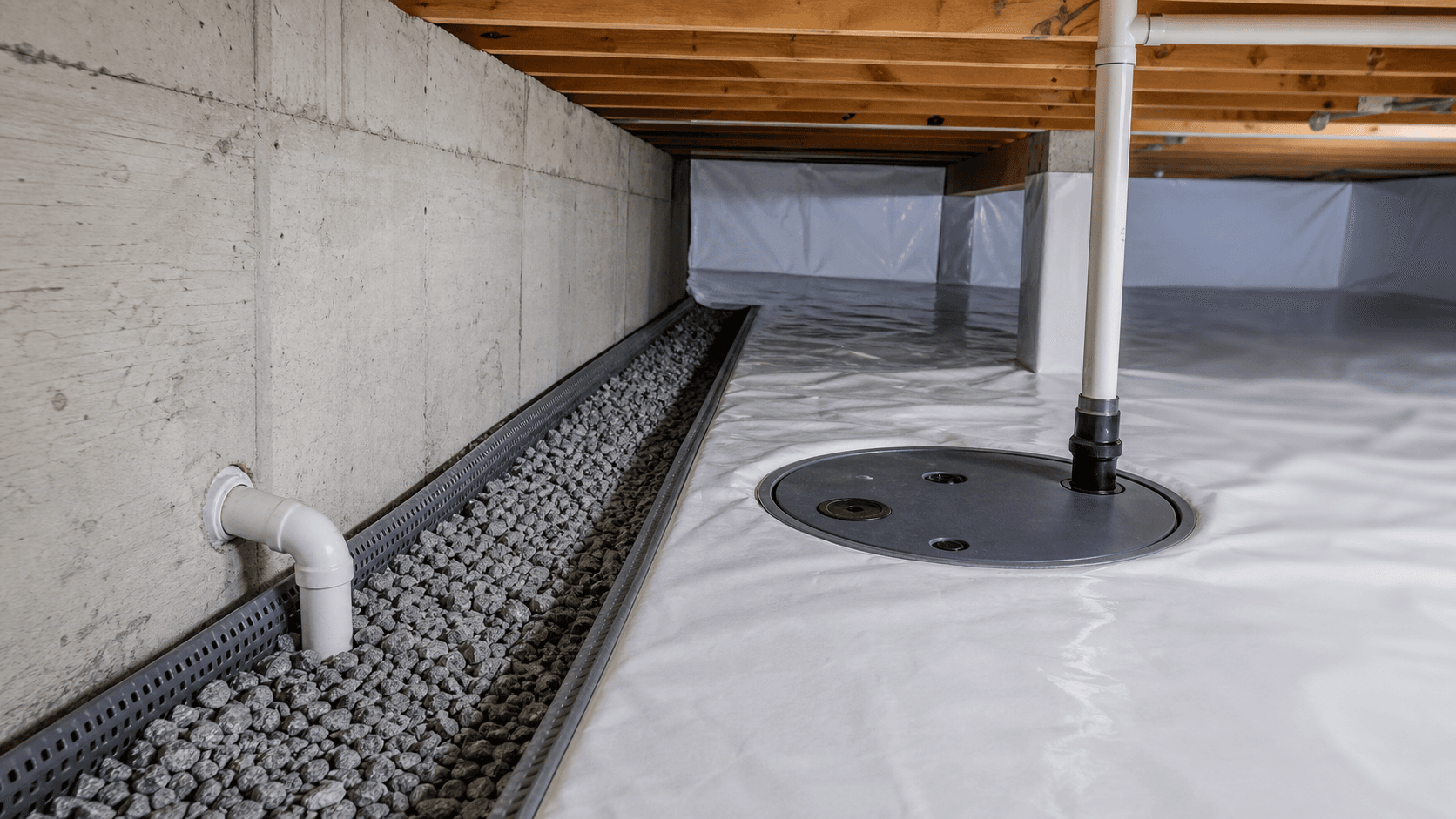
Crawl space pricing is inconsistent because a quote may cover a vapor barrier only or a full encapsulation with drainage, a sump pump, a dehumidifier, and insulation. Put your quote next to the typical crawl space repair cost ranges and benchmark your number with the cost estimator to see whether it lands in the same neighborhood.
If your quote lands inside the range, price is not your problem to solve yet. If it is far above or far below, that is a signal to look harder at the scope, not proof on its own that the quote is wrong. A high number can include drainage, a dehumidifier, or structural work a cheaper bid left out.
Step 2
Is the scope fully documented?
A number only means something once you know what work it buys. A comparable quote names the diagnosed moisture source, the proposed work and why it fits, materials and quantities such as vapor barrier thickness and drainage length, exclusions, cleanup, and warranty terms. If a proposal lists a total and a product name but skips the reasoning, it is not yet judgeable.
Upload the quote to the AI analyzer to see where the wording is clear and where it is vague, before price alone carries any weight.
Step 3
Does the price match the scope?
The final check ties the first two together. A quote clears the fairness test only when a reasonable price and a fully documented scope point at the same work. Run your quote through the three gates below before price alone carries any weight.
How to read your result.If your quote clears all three gates — the price is in range, the scope is fully written down, and the two match — it is likely fair, and the next move is to get the remaining details in writing before you sign. If any gate fails — the price is far off, the scope is vague, or the two do not line up — treat that as your cue to have the scope clarified or to get an independent second opinion before committing. A quote that cannot survive that check is not one to sign under time pressure.
Warning signs
Overpriced versus suspiciously low
Most guides warn about one direction and stop. A crawl space quote can fail in either. These are the patterns that tend to signal a padded, overpriced quote on one side, and a bid that is too cheap to trust on the other.
| Where to look | May be overpriced | May be too low to trust |
|---|---|---|
| Line items | Round total with no breakdown; bundled encapsulation extras you did not ask about | No scope at all; a single lump sum well below other bids |
| Pressure | “Today only” discount, urgency to sign, or a large deposit up front | Eager to start immediately with no moisture diagnosis |
| Scope | Adds a dehumidifier, full encapsulation, or insulation you may not need, priced high | Omits drainage, a real vapor barrier thickness, a sump, or warranty to reach a low number |
| Warranty | “Lifetime” coverage with vague terms used to justify the price | No written warranty, or coverage promised only verbally |
| Paperwork | Polished but padded, with line items that have no stated moisture cause | No written proposal; a price quoted on the spot |
None of these prove a contractor is dishonest. Each one means you should ask for a written explanation before you decide. A serious crawl space project should hold up to questions and a side-by-side scope comparison.
The real trap
A fair price for the wrong work
The most expensive mistake is not overpaying by a few hundred dollars. It is paying a perfectly normal price for the wrong work. If a quote prices a full encapsulation for what is really a drainage or downspout problem, or seals a crawl space that still has an active leak, the number can look fair while the work does not fix the cause. That is why price and scope have to be judged together, and why a neutral second look is worth it on expensive projects.
Related guidance
Related pages
FAQs
Is my crawl space quote fair? FAQs
Is my crawl space quote fair?
A crawl space quote is fair when two things line up: the price sits within the normal range for that specific work, and the scope is fully documented. Benchmark the number against planning ranges, then confirm the estimate names the water source, drainage, vapor barrier thickness, sump, dehumidifier, insulation, cleanup, and warranty. A number that looks reasonable can still be a poor deal when the scope is vague.
How much should crawl space repair cost?
There is no single figure. Crawl space work ranges widely because a quote may cover only a vapor barrier, or a full encapsulation with drainage, a sump pump, a dehumidifier, insulation, and structural support. Use the crawl space repair cost ranges and the cost estimator as a benchmark for your situation, not as a quote.
Why do crawl space quotes vary so much?
Two contractors can look at the same damp crawl space and price very different scopes. One may quote a vapor barrier only; another may include drainage, a sump pump, encapsulation, a dehumidifier, and insulation. That is why comparing the documented scope matters more than comparing the totals.
Is a low crawl space quote a red flag?
It can be. A bid well below the others often leaves something out — drainage, a real vapor barrier thickness, a sump pump, a dehumidifier, cleanup, or a written warranty. A low number is not automatically wrong, but it should prompt you to check what the scope omits before treating it as a bargain.
Should I get a second opinion on a crawl space encapsulation quote?
Consider one when quotes conflict, the recommended work is expensive, a home is being bought or sold, or the crawl space has standing water, structural concerns, or mold. An independent inspection can confirm whether the proposed work addresses the actual moisture source, separate from any incentive to sell a full encapsulation.
What should a fair crawl space quote include?
A fair, comparable quote names the diagnosed moisture source, the proposed work and why it fits, materials and quantities such as vapor barrier thickness and drainage length, exclusions, cleanup, payment terms, and clearly defined warranty coverage. If any of those are missing, ask the contractor to document them before you judge the price.
Sources